Vijayalakshmi Deer Brand Urad Gota vs Rajma: Which Is More Nutritious?
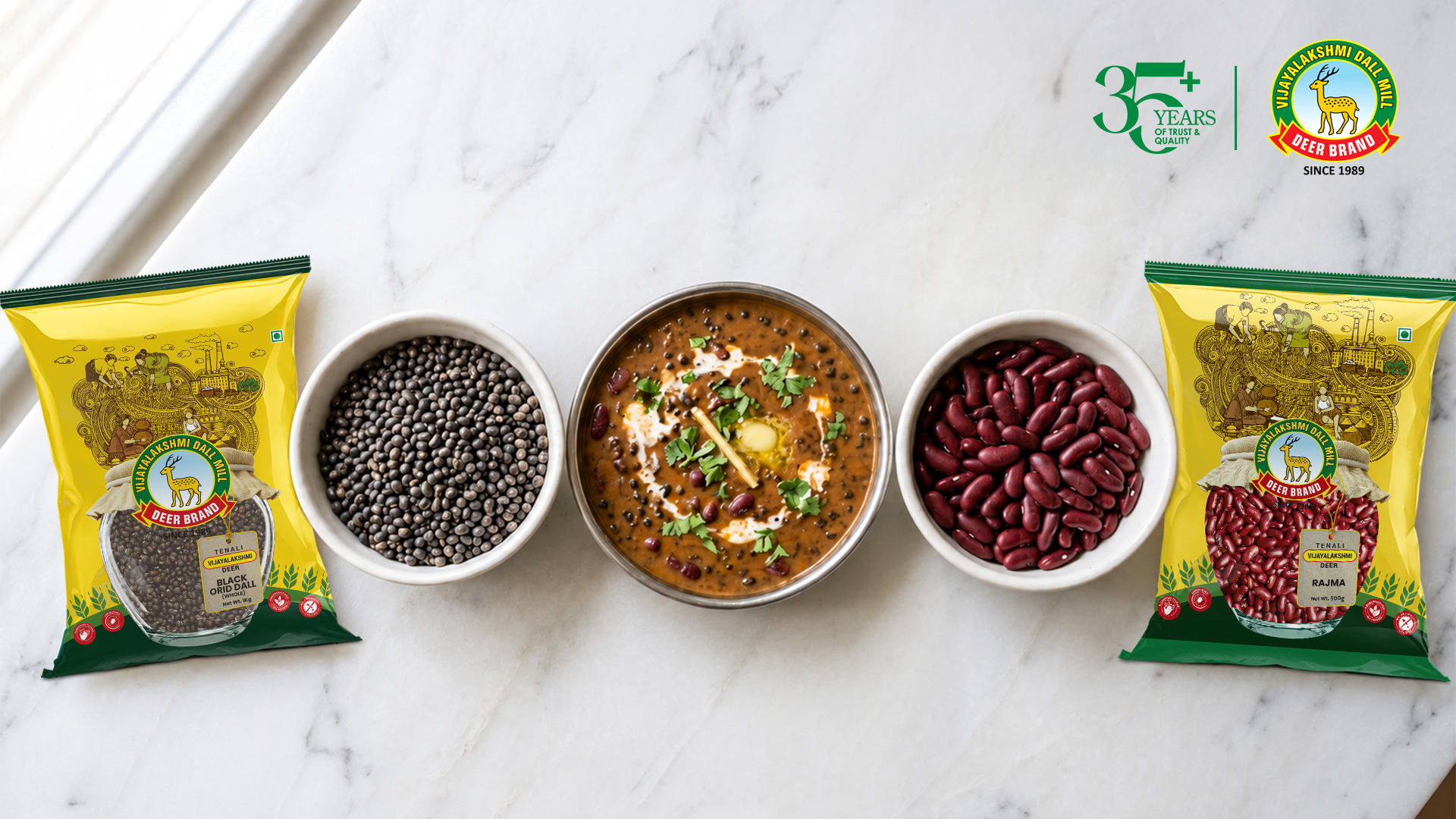
Both urad gota and rajma are whole legumes that appear regularly in Indian cooking. Urad gota is the whole black gram used in dal makhani and traditional South Indian preparations. Rajma is the kidney bean used in the beloved North Indian rajma chawal. Both are nutritious, both are protein-rich, and both are high in fibre. But they have distinct nutritional profiles that make each more suitable for different health goals and cooking applications.
This post compares urad gota and rajma across all key nutritional dimensions so you can make informed choices for your health and cooking needs.
Urad Gota vs Rajma: Nutritional Comparison Per 100g
Nutrient | Urad Gota | Rajma |
Calories | 341 kcal | 333 kcal |
Protein | 25g | 24g |
Dietary Fibre | 18 to 20g | 15g |
Iron | 7 to 8mg | 6.7mg |
Calcium | 138mg | 143mg |
Magnesium | 267mg | 138mg |
Phosphorus | 379mg | 407mg |
Potassium | 983mg | 1406mg |
Folate | 216 mcg | 394 mcg |
Glycaemic Index | 38 to 45 | 29 to 36 |
Which Has More Protein: Urad Gota or Rajma?
Urad gota has a slight edge on protein at approximately 25g per 100g compared to rajma at approximately 24g per 100g. The difference is small and both are excellent plant protein sources.
The more important difference is in amino acid profile. Both are legumes and share a similar amino acid pattern: rich in lysine but relatively low in methionine. When paired with rice as in traditional Indian meals, both form a complete protein. Urad gota paired with rice in dal makhani and rajma paired with rice in rajma chawal are both nutritionally complete protein meals.
For people specifically focused on protein for muscle building, both are comparable choices. The practical consideration is usually cooking time and preparation preference rather than protein content. For a complete guide on urad gota protein, read our post on why urad dal is one of the best sources of plant protein.
Which Has More Fibre: Urad Gota or Rajma?
Urad gota has more dietary fibre than rajma at 18 to 20g per 100g compared to approximately 15g for rajma. This is a meaningful difference for gut health, cholesterol management, and satiety.
For people whose primary goal is maximising dietary fibre for gut health, cholesterol reduction, or weight management, urad gota is the better choice. The higher fibre content also gives urad gota a slightly stronger satiety effect per serving which is relevant for weight management.
Which Is Better for Iron: Urad Gota or Rajma?
Urad gota has a slight edge on iron at 7 to 8mg per 100g compared to approximately 6.7mg for rajma. Both are good plant-based iron sources and both should be paired with vitamin C-rich accompaniments to improve the absorption of non-haem plant iron.
For people managing iron deficiency, both urad gota and rajma are useful dietary additions. Urad gota has a marginal advantage but eating both regularly as part of a varied diet gives broader nutritional coverage. For a complete guide on urad gota and iron, read our post on is urad dal good for iron deficiency.
Which Is Better for Magnesium: Urad Gota or Rajma?
Urad gota significantly outperforms rajma on magnesium at 267mg per 100g compared to approximately 138mg for rajma. This is nearly double the magnesium content.
Magnesium is one of the most important and commonly deficient minerals in the Indian diet. It supports nerve function, muscle relaxation, blood pressure regulation, sleep quality, bone health, and insulin signalling. For people who are specifically focused on magnesium intake for any of these health goals, urad gota is clearly the better choice.
Which Is Better for Folate: Rajma or Urad Gota?
Rajma has significantly more folate than urad gota at approximately 394 mcg per 100g compared to 216 mcg for urad gota. This is an important distinction for women of reproductive age and pregnant women for whom folate is critical.
For people who need to maximise dietary folate intake, rajma is the better choice of these two legumes. However both are good folate sources and eating both regularly provides a higher combined folate intake than either alone.
Which Has a Lower Glycaemic Index: Urad Gota or Rajma?
Rajma has a slightly lower glycaemic index at approximately 29 to 36 compared to urad gota at approximately 38 to 45. Both are low glycaemic index foods and both are suitable for people managing blood sugar and diabetes.
The practical difference is small. For people who are very sensitive to blood sugar fluctuations, rajma has a marginal advantage. For most people managing blood sugar, both are excellent choices and eating both regularly provides variety alongside blood sugar management benefit.
Which Is Easier to Digest: Urad Gota or Rajma?
Neither urad gota nor rajma is the easiest legume to digest. Both are whole legumes with intact outer skins that contain complex fibre compounds that can cause gas in some people. Both benefit significantly from overnight soaking, thorough cooking, and the addition of digestive spices like cumin, ginger, and asafoetida.
Between the two, many people find rajma slightly harder to digest than urad gota. Rajma contains lectins that need to be deactivated by thorough cooking, and it tends to cause more digestive discomfort when undercooked. Both should always be soaked overnight and cooked completely before eating.
Which Is Better for Bone Health: Urad Gota or Rajma?
Urad gota is better for bone health than rajma primarily because of its significantly higher magnesium content. Magnesium is essential for converting vitamin D into its active form which is needed for calcium absorption. Without adequate magnesium, calcium cannot be properly absorbed and utilised by bones.
While rajma has slightly more calcium (143mg vs 138mg) and phosphorus (407mg vs 379mg), the much higher magnesium in urad gota makes it the more bone-supportive choice overall. For a complete guide on urad gota and bone health, read our post on Vijayalakshmi Deer Brand urad gota for bone and joint health.
Which Is Better for Heart Health: Urad Gota or Rajma?
Both are good for heart health through their fibre and potassium content. Rajma has significantly more potassium at approximately 1,406mg per 100g compared to 983mg for urad gota. Potassium is one of the most important dietary factors in blood pressure regulation.
However urad gota has more dietary fibre which supports cholesterol reduction, and more magnesium which supports blood vessel relaxation and blood pressure management. For heart health overall, both are valuable and eating both regularly gives the broadest cardiovascular benefit.
Urad Gota vs Rajma: Which Should You Choose?
The honest answer is both. Urad gota and rajma have different nutritional strengths and choosing between them exclusively means missing the benefits of the other. Here is a practical summary of when each is the better choice:
Choose urad gota when:
- Maximising dietary fibre for gut health, cholesterol, or weight loss
- Prioritising magnesium for nerve health, sleep, bone health, or blood pressure
- Making dal makhani or traditional South Indian preparations
- Sprouting for maximum nutritional benefit
- Following Ayurvedic dietary recommendations
Choose rajma when:
- Maximising potassium for blood pressure management
- Maximising folate for reproductive health or pregnancy
- Wanting a slightly lower glycaemic index
- Making rajma chawal or North Indian kidney bean dishes
Choose both when:
- Wanting the broadest legume nutritional coverage
- Making dal makhani (traditional recipe uses both together)
- Aiming for varied gut microbiome support through different prebiotic fibre types
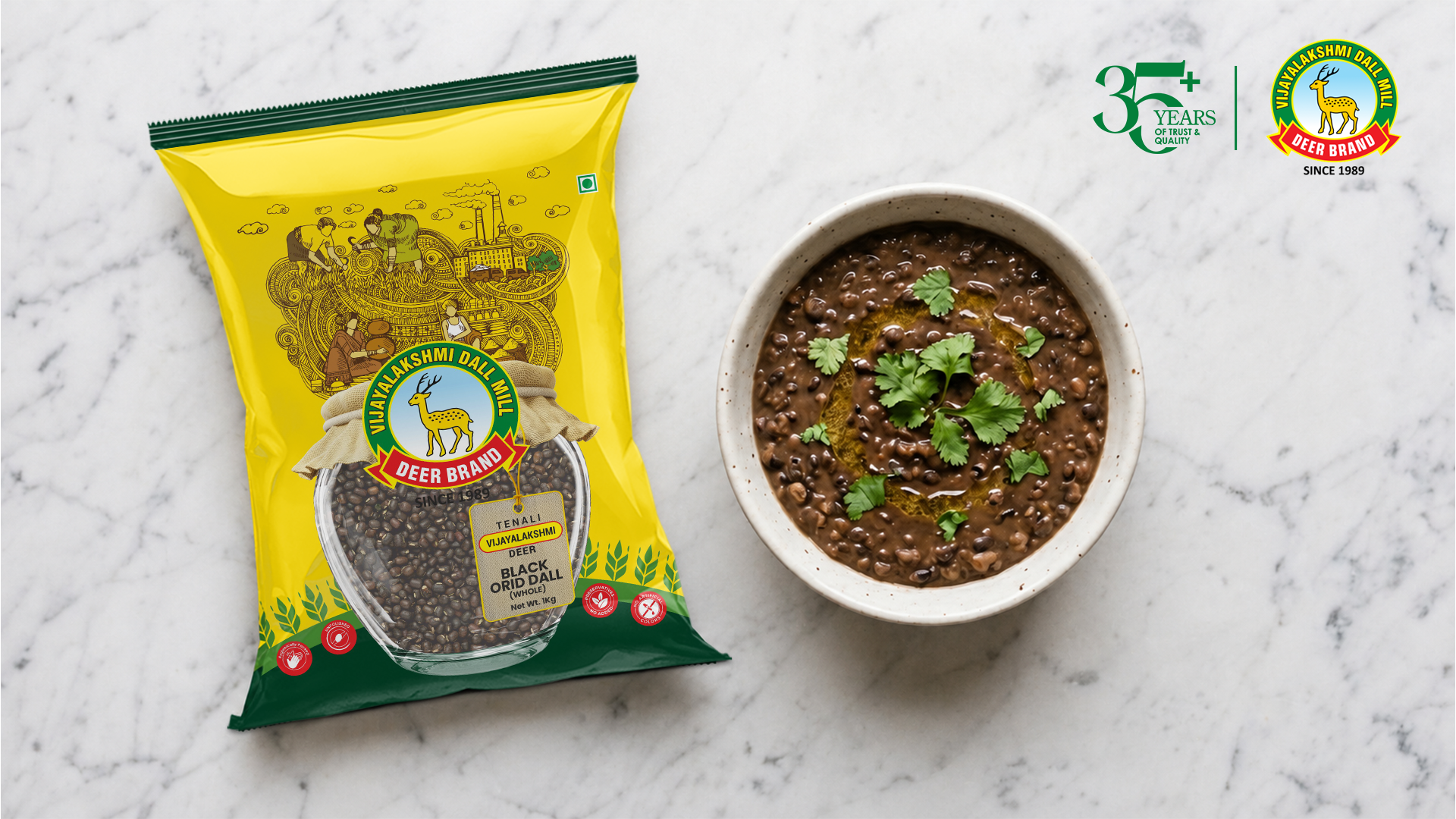
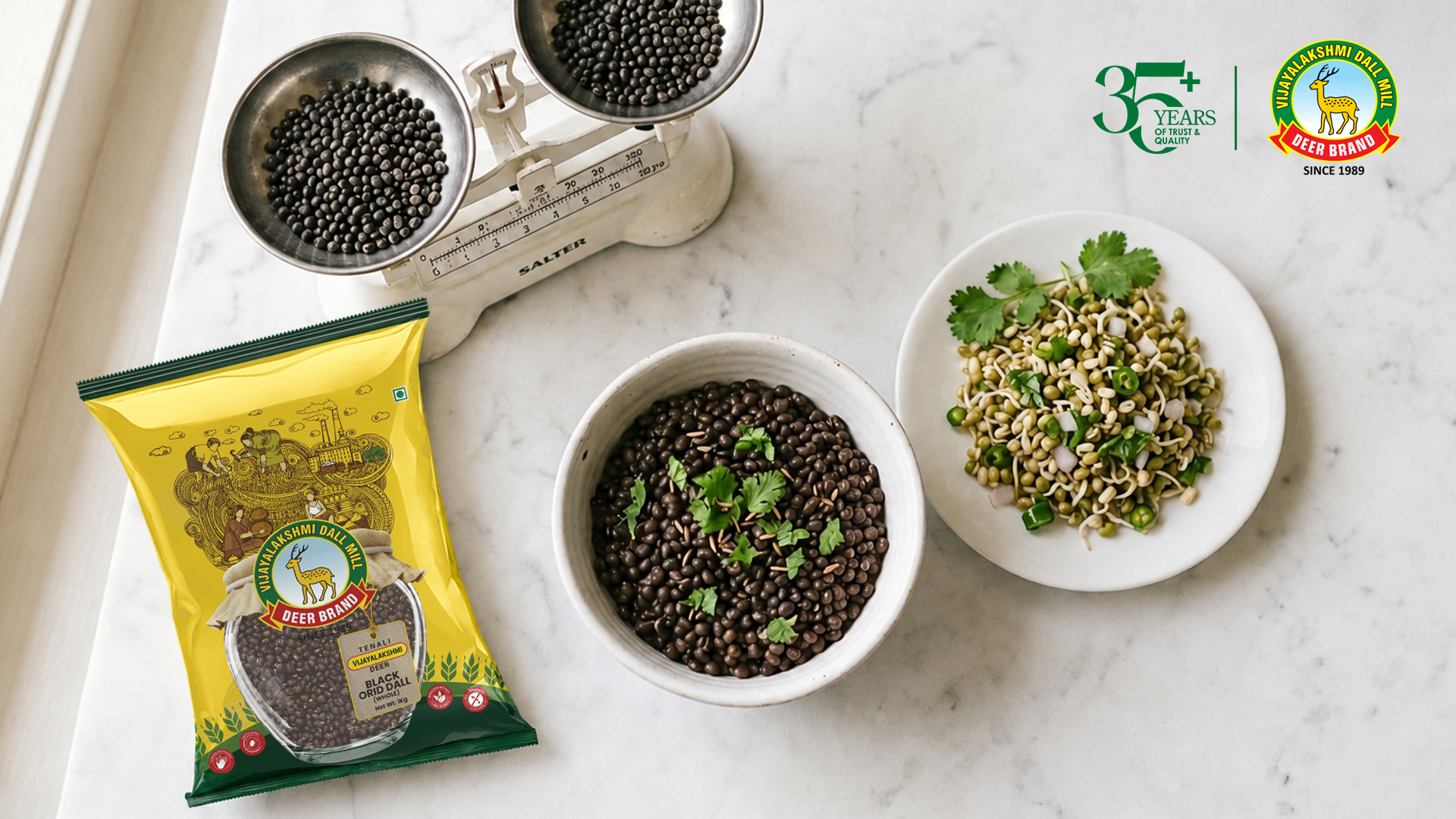
For naturally processed Vijayalakshmi Deer Brand urad gota, buy Vijayalakshmi Deer Brand natural urad gota — available in 500g, 1kg, and 5kg packs on JioMart, Amazon, and Flipkart.
Frequently Asked Questions
Can I eat both urad gota and rajma together? Yes. Dal makhani traditionally uses both whole urad gota and kidney beans together. The combination provides broader nutritional coverage than either alone and the two legumes complement each other well in terms of amino acid profile, flavour, and texture.
Which is higher in protein, urad gota or rajma? Urad gota has slightly more protein at approximately 25g per 100g compared to rajma at approximately 24g per 100g. The difference is small and both are excellent plant protein sources.
Is rajma or urad gota better for diabetics? Both have low glycaemic indices and are suitable for people managing diabetes. Rajma has a slightly lower GI at 29 to 36 compared to urad gota at 38 to 45. However both are good choices and both support blood sugar management through their fibre and protein content.
Which is better for weight loss, urad gota or rajma? Both are good for weight loss through their high protein and fibre content. Urad gota has slightly more fibre which provides a stronger satiety effect. For weight loss specifically, urad gota has a marginal advantage but both are effective when eaten as part of a calorie-appropriate diet. For a complete guide read our post on urad gota for weight loss.
Do urad gota and rajma have the same cooking time? Both require overnight soaking and thorough pressure cooking. Rajma typically takes slightly longer to cook than urad gota, requiring 8 to 10 whistles in a pressure cooker compared to 6 to 8 for urad gota after overnight soaking.
The Bottom Line
Urad gota and rajma are both nutritionally excellent whole legumes with different strengths. Urad gota leads on fibre, iron, and magnesium. Rajma leads on potassium and folate. Both provide comparable protein and are low glycaemic index foods suitable for blood sugar management.
The most nutritionally sophisticated approach is to eat both regularly rather than choosing one exclusively. Dal makhani, which combines both in one dish, is the traditional Indian way of getting the combined nutritional benefit of these two excellent legumes.
For naturally processed whole urad gota that retains its complete nutritional profile, shop Vijayalakshmi Deer Brand urad gota — available on JioMart, Amazon, and Flipkart.
Published by the Deer Brand Team — Vijayalakshmi Dall Mills, manufacturers of premium natural urad dal in Tenali, Andhra Pradesh since 1989.