How to Check Urad Dal Quality at Home (5 Simple Tests Anyone Can Do)

Most households buy urad dal the same way every time – same shop, same brand, same bag – without ever questioning whether what’s inside is actually good. But here’s the thing: low-quality urad dal doesn’t just affect taste. It’s the reason your idli batter refuses to ferment, your vadas turn oily, and your dosas never get that restaurant-level crispiness.
The good news is you don’t need a lab or a food scientist to check urad dal quality. These five simple tests take less than 10 minutes and can be done right in your kitchen before you even start soaking.
Why Does Urad Dal Quality Matter So Much?
Urad dal quality directly determines whether your idli batter ferments. The fermentation process depends on natural mucilage – a gel-like compound found in the bran layer of whole, unpolished urad dal. When the dal is old, adulterated, over-polished, or poorly stored, this mucilage is either degraded or missing entirely. The result is a flat, dense batter that no technique or recipe can rescue.
Beyond fermentation, low-quality urad dal often contains:
Broken or undersized grains that cook unevenly
Stones and debris that damage grinders and teeth
Chemical polishing agents that add shine but strip nutrition
Mixed varieties – cheaper dal blended in to increase volume
Old stock that has lost its natural oils and aroma
Running through these five tests before you cook takes minutes and saves the entire meal.
Test 1 – The Look Test
Good urad dal is easy to identify visually once you know what to look for. Here’s what to check:
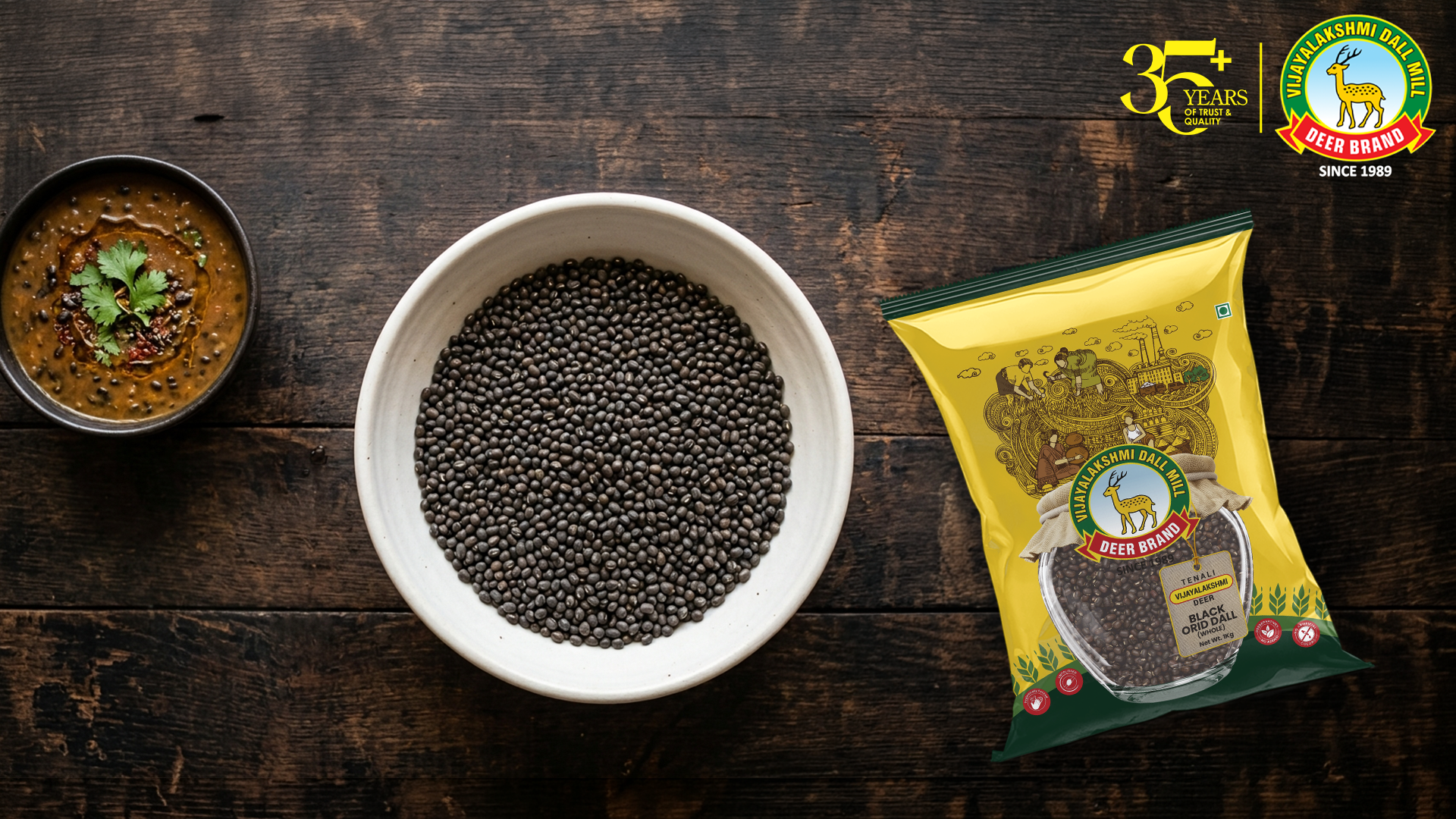
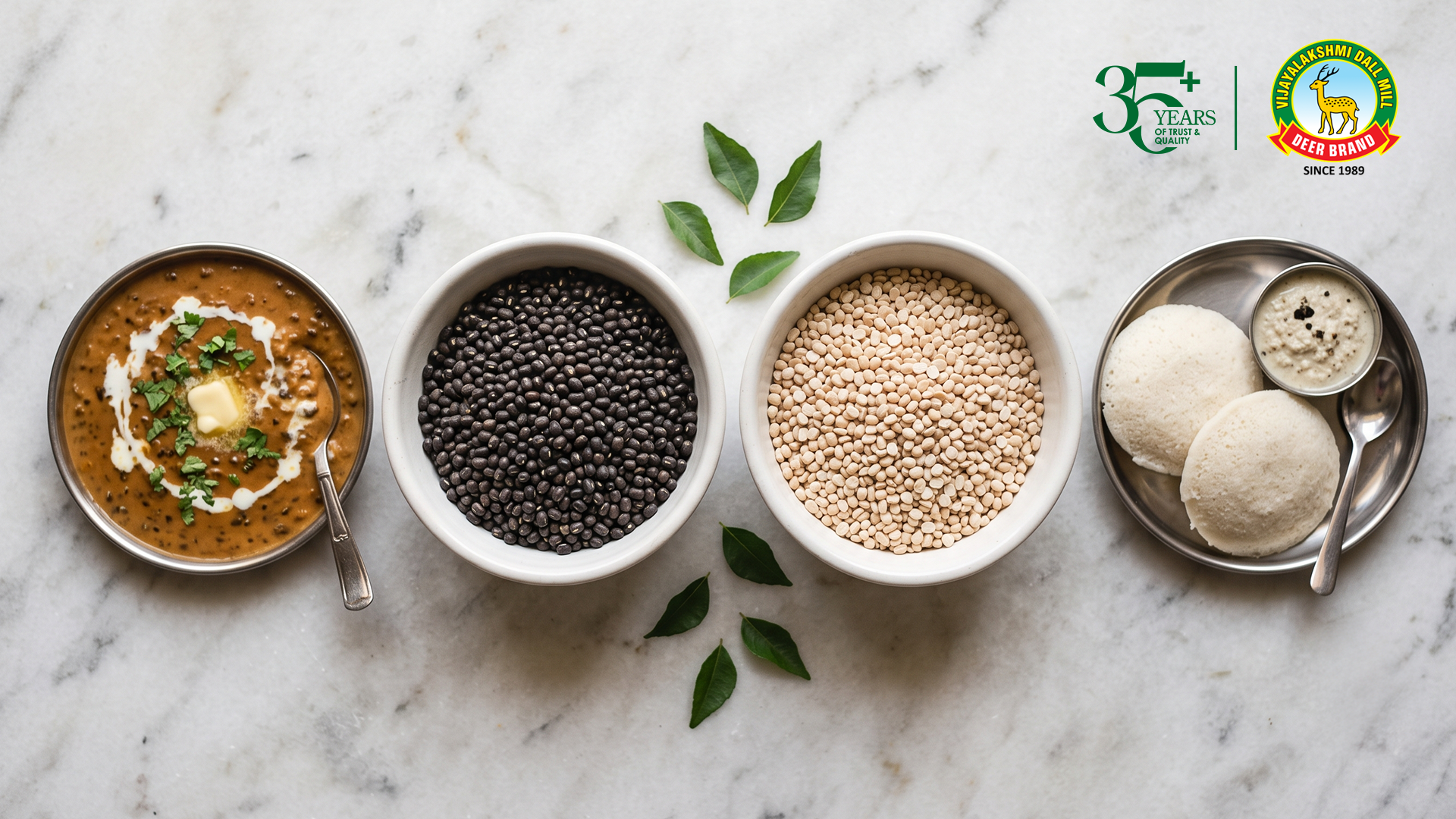
Colour: Whole unpolished urad dal should have a consistent cream-white interior when split open. The outer skin is naturally dark – almost black or deep grey. If the grain looks unnaturally bright white or has a shiny, almost glossy surface, it has likely been polished with oil or water, which strips the bran layer.
Uniformity: High-quality dal has consistent grain size. If your batch has a mix of full grains, half grains, and powder at the bottom of the bag, it’s either poorly graded or old stock that has broken down during storage.
Debris: Spread a small handful on a white plate. Look for stones, grit, husks from other grains, or discoloured grains. A small amount of natural variation is normal. Visible stones or mixed grain types are a sign of poor cleaning standards.
Verdict: Uniform, matte-finished grains with consistent size and no visible debris = good quality.
Test 2 – The Smell Test
Fresh urad dal has a clean, mildly earthy, slightly nutty smell. Trust your nose – it picks up problems that your eyes might miss.
Musty or stale smell: This means the dal has been stored in a humid environment or for too long. Moisture causes the natural oils in the grain to go rancid. Dal that smells musty will not ferment well and can cause digestive discomfort.
Chemical or sharp smell: A faint chemical odour – almost like mild solvent or artificial freshness – often indicates the use of polishing agents. Some unscrupulous suppliers treat dal with diluted chemicals to make it appear whiter and shinier. This smell is particularly noticeable right after you open a new bag.
No smell at all: Very old dal sometimes loses its natural aroma entirely. Smell-neutral dal is not necessarily bad, but combined with other signs like powdery texture or yellowed colour, it’s a warning sign.
Verdict: Clean, mildly earthy smell = fresh and natural. Musty, chemical, or completely odourless = inspect further.
Test 3 – The Touch Test
Pick up a small handful of dry urad dal and rub it between your fingers. Fresh, good-quality dal tells you a lot through touch alone.
Firm and slightly rough: Good whole urad dal feels firm and has a slightly rough, natural texture from its unpolished bran layer. It should not crumble or break easily when pressed between your fingers.
Powdery residue: If your fingers come away coated in white powder after handling the dal, the grains are either over-polished or have broken down due to age and moisture. This powdery residue is essentially lost starch – it means you’re paying for dal that has already partially degraded.
Oily or sticky feel: A slightly oily or slippery texture is a sign of oil polishing – a common practice where refined oil is applied to make the dal look premium and shiny. Oil-polished dal doesn’t ferment reliably and loses its natural nutrition profile.
Verdict: Firm, slightly rough, no excessive powder or oiliness = natural and fresh.
Test 4 – The Fermentation Test
This is the ultimate quality test – and the one that matters most for idli and dosa. If you’ve already bought the dal and you’re not sure about its quality, this test gives you a definitive answer before you commit a full batch.
How to do it:
Soak 2 tablespoons of the urad dal in water for 4 hours
Grind to a smooth, thick batter with minimal water
Leave the batter covered at room temperature for 8 hours
Check: has the batter visibly risen? Does it look airy and slightly bubbly? Does it smell faintly tangy?
What good looks like: The batter should increase in volume by at least 25- 30%, look airy rather than dense, and have a mild, pleasant fermented smell. If you dip a spoon in, it should feel light – almost like a mousse.
What bad looks like: The batter sits flat, unchanged, and smells either neutral or faintly sour without rising. This means the mucilage content is insufficient for proper fermentation – and no amount of extra soaking time or warm weather will fix it.
This is also the quickest way to diagnose why your idli batter has been underperforming. If you switch to high-quality urad dal for idli and dosa and run the same test, the difference in fermentation is usually immediately visible.
“Sprouting is another excellent quality test for whole black urad dal. For a complete guide on sprouting urad dal at home, read our post on how to sprout Vijayalakshmi Deer Brand urad dal at home.”
Test 5 – The Brand Consistency Test
The first four tests tell you about the specific batch you’re holding. This fifth test is about something equally important: whether your dal brand is consistent across every purchase.
Consistency is what separates a reliable supplier from a one-time good batch. Hotel kitchens and professional cooks don’t just want good dal once – they need it to perform the same way every single time, every season, regardless of the batch.
Signs of an inconsistent brand:
The same brand looks noticeably different between purchases (colour, grain size, smell)
One bag ferments well, the next doesn’t – with no change in your method
Quality seems to vary by season or batch number
Signs of a consistent brand:
Identical appearance, smell, and texture across multiple purchases
Batter ferments reliably in the same time, same conditions, every time
Clear batch information and packaging date on every pack
Deer Brand’s unpolished urad dal is processed across four ISO and HACCP certified units in Tenali, Guntur District, with a combined capacity of 240 tonnes per day. That scale and certification structure exists specifically to ensure that every bag – whether it’s a 500g home pack or a 50kg restaurant sack – meets the same quality standard. It’s the reason hotel kitchens across Andhra Pradesh, Telangana, Kerala, and Karnataka have been buying from the same source for over 35 years.
If you’ve been cycling through brands looking for one that works reliably, try Deer Brand urad dal and run all five of these tests on your first bag. The results usually end the search.
For Telugu home cooks specifically, read our regional guide on the best urad dal in Andhra Pradesh and Telangana.
Quick Reference: The 5-Test Summary
Look Test
Check for uniform grain size – no mix of whole and broken pieces
Colour should be matte, not shiny or artificially white
Spread on a white plate – no stones, grit, or debris
Smell Test
Fresh dal smells clean and mildly earthy
Musty or stale smell = old stock or poor storage
Chemical or sharp smell = polishing agents used
Touch Test
Should feel firm and slightly rough – natural bran texture
Excessive white powder on fingers = over-polished or degraded
Oily or slippery feel = oil polishing applied
Fermentation Test
Soak 2 tbsp for 4 hours, grind, leave 8 hours at room temperature
Pass: batter rises 25 -30%, looks airy, smells faintly tangy
Fail: batter sits flat, dense, no visible rise
Brand Consistency Test
Same colour, smell, and texture across every purchase
Batter ferments in the same time every batch
Clear packaging date and batch info on every pack
Once you have confirmed your dal passes these quality checks, storing it correctly is the next step. Read our guide on how to store urad dal at home to keep it fresh for longer.
Frequently Asked Questions
How do I know if my urad dal is good quality? Run the five tests above – look, smell, touch, fermentation, and brand consistency. The most reliable of the five is the fermentation test: soak a small amount, grind it, and leave the batter for 8 hours. If it rises and turns airy, your dal is good. If it sits flat, switch brands.
What does adulterated urad dal look like? Adulterated urad dal typically has inconsistent grain sizes – a mix of whole grains and smaller, broken pieces from cheaper varieties. It may also have visible debris, an unnaturally bright white colour from over-polishing, or a faint chemical smell. Spreading a handful on a white plate makes these signs much easier to spot.
Why is my urad dal batter not rising even after 8 hours? The most common cause is polished or old urad dal that lacks the natural mucilage needed for fermentation. Other possible causes include water that was too cold during soaking, soaking for too long (beyond 6 hours), or batter that was ground too thin. Start by checking your dal quality – it resolves the issue in most cases. For a full breakdown of fermentation troubleshooting, read our guide on why idli batter doesn’t ferment and how to fix it.
What colour should good urad dal be? The interior of a whole urad dal grain should be cream-white when split open. The outer skin is naturally dark – black or deep grey. If the exterior is unnaturally bright white or has a polished sheen, the bran layer has been removed or chemically treated, which reduces both nutrition and fermentation performance.
The Bottom Line
Bad urad dal is one of the most common – and most overlooked – reasons for cooking failures in South Indian kitchens. The five tests above take under 10 minutes and give you a clear picture of what you’re working with before a single grain goes into water.
Fresh, whole, unpolished urad dal – cleaned consistently and packed without chemical treatment – passes every one of these tests without effort. That is the standard Deer Brand has maintained since 1989, and it’s why the same brand that supplies hotel kitchens is available for your home kitchen too.
If your current dal is failing even two of these five tests, it’s time to switch. Try natural unpolished urad dal from Deer Brand – and run the fermentation test on your very first batch.
Published by the Deer Brand Team – Vijayalakshmi Dall Mills, manufacturers of premium unpolished urad dal in Tenali, Andhra Pradesh since 1989.