Why Vijayalakshmi Urad Dal Is Good for Your Heart Health
Heart disease is the leading cause of death in India, and diet plays a more significant role in cardiovascular health than most people realise. The foods you eat every day, not just the occasional indulgence, determine your cholesterol levels, blood pressure, inflammation, and overall cardiovascular risk over time.
Urad dal is one of those everyday foods that quietly does a lot for your heart. It is rich in dietary fibre, potassium, magnesium, and protein, all of which are directly involved in maintaining cardiovascular health. This post covers exactly how Vijayalakshmi urad dal supports heart health, what nutrients it provides, and how to eat it in ways that maximise the cardiovascular benefit.
Is Urad Dal Good for Heart Health?
Yes, urad dal is genuinely good for heart health. It supports cardiovascular function through four main mechanisms: its soluble fibre content which helps reduce LDL cholesterol, its potassium content which supports healthy blood pressure, its magnesium content which supports heart muscle function, and its low saturated fat content which makes it a heart-friendly protein source.
For people looking to improve their cardiovascular health through diet, urad dal is one of the most practical and nutritionally efficient foods available in everyday Indian cooking. It is already part of daily meals for millions of people and simply eating it more consistently and in the right preparations can make a meaningful difference to cardiovascular health markers over time.
How Does Urad Dal Help Lower Cholesterol?
Cholesterol management is one of the most important aspects of cardiovascular health, and urad dal supports it through its soluble fibre content.
Urad dal contains 18 to 20g of dietary fibre per 100g of dry dal, a significant portion of which is soluble fibre. Soluble fibre dissolves in water to form a gel-like substance in the digestive tract. This gel binds to cholesterol and bile acids in the intestine and prevents them from being reabsorbed into the bloodstream. Instead they are excreted from the body, which forces the liver to use more circulating cholesterol to produce new bile acids. Over time this process reduces LDL cholesterol, commonly referred to as bad cholesterol.
Research on legume consumption consistently shows that eating legumes like urad dal regularly is associated with lower LDL cholesterol levels. A meta-analysis of multiple studies found that eating one serving of legumes per day was associated with a 5 percent reduction in LDL cholesterol compared to control diets.
The practical implication is that eating urad dal consistently every day, not just occasionally, is what produces the cholesterol-lowering benefit. Two idlis at breakfast every morning is more effective for cholesterol management than eating dal makhani once a week.
“For a complete dedicated guide on urad dal and cholesterol reduction including how much to eat and how long it takes, read our post on can urad dal help lower cholesterol.”
How Does Urad Dal Support Healthy Blood Pressure?
High blood pressure or hypertension is one of the most significant risk factors for heart disease and stroke. Urad dal supports healthy blood pressure through two nutrients: potassium and magnesium.
Potassium (983mg per 100g)
Potassium is one of the most important dietary factors in blood pressure regulation. It works by counteracting the blood pressure-raising effects of sodium. When potassium intake is high, the kidneys excrete more sodium in urine, which reduces fluid retention and lowers blood pressure.
Urad dal provides 983mg of potassium per 100g, making it one of the highest potassium foods in the everyday Indian diet. The daily recommended potassium intake for adults is approximately 3,500mg. A single serving of urad dal contributes meaningfully toward this target.
Magnesium (267mg per 100g)
Magnesium plays a direct role in blood pressure regulation by supporting the relaxation of blood vessel walls. When blood vessels are relaxed and flexible, blood flows more easily and pressure is lower. Magnesium deficiency is associated with increased blood pressure and increased cardiovascular risk.
“Magnesium also plays a critical role in nervous system health. For a complete guide on how Vijayalakshmi urad dal supports your nervous system through magnesium and B vitamins, read our post on how Vijayalakshmi urad dal supports your nervous system.”
Urad dal is exceptionally rich in magnesium at 267mg per 100g, one of the highest magnesium contents of any food in everyday Indian cooking. Regular consumption of magnesium-rich foods like urad dal is one of the most practical dietary strategies for maintaining healthy blood pressure.
For the complete nutritional breakdown of urad dal including all minerals and vitamins, read our post on urad dal nutrition facts per 100g.
Is Urad Dal Good for Reducing Inflammation?
Chronic low-grade inflammation is increasingly recognised as a key driver of cardiovascular disease. Inflammation damages the walls of arteries, promotes the formation of plaques, and increases the risk of heart attack and stroke.
Urad dal supports reduced inflammation through two mechanisms:
Dietary fibre and gut health
The high fibre content of urad dal feeds beneficial gut bacteria, which produce short-chain fatty acids during fermentation in the large intestine. Short-chain fatty acids have well-documented anti-inflammatory effects and help maintain the integrity of the gut barrier. A healthy gut barrier prevents inflammatory compounds from leaking into the bloodstream, which reduces systemic inflammation and cardiovascular risk.
Fermentation benefits
Fermented urad dal preparations like idli and dosa introduce live beneficial bacteria into the digestive system and reduce antinutrients that can promote inflammation. Regular consumption of fermented foods is associated with lower markers of systemic inflammation in multiple research studies.
For a deeper look at how fermented urad dal supports gut health and reduces inflammation, read our post on is urad dal good for your gut.
How Does Urad Dal Compare to Other Heart-Healthy Foods?
Here is how urad dal compares to other commonly recommended heart-healthy foods on key cardiovascular nutrients per 100g:
Soluble fibre:
- Urad dal: 18 to 20g total fibre with significant soluble fraction
- Oats: 10g total fibre with high soluble fraction
- Moong dal: 16g total fibre
- Toor dal: 15g total fibre
Potassium:
- Urad dal: 983mg
- Banana: 358mg
- Spinach: 558mg
- Moong dal: 789mg
Magnesium:
- Urad dal: 267mg
- Almonds: 270mg
- Moong dal: 189mg
- Spinach: 79mg
Urad dal compares extremely favourably against other heart-healthy foods on all three key cardiovascular nutrients. It also has significantly more protein than most plant foods recommended for heart health, which helps with satiety and weight management, both of which are important for cardiovascular health.
Which Urad Dal Preparations Are Best for Heart Health?
Fermented idli batter (best choice)
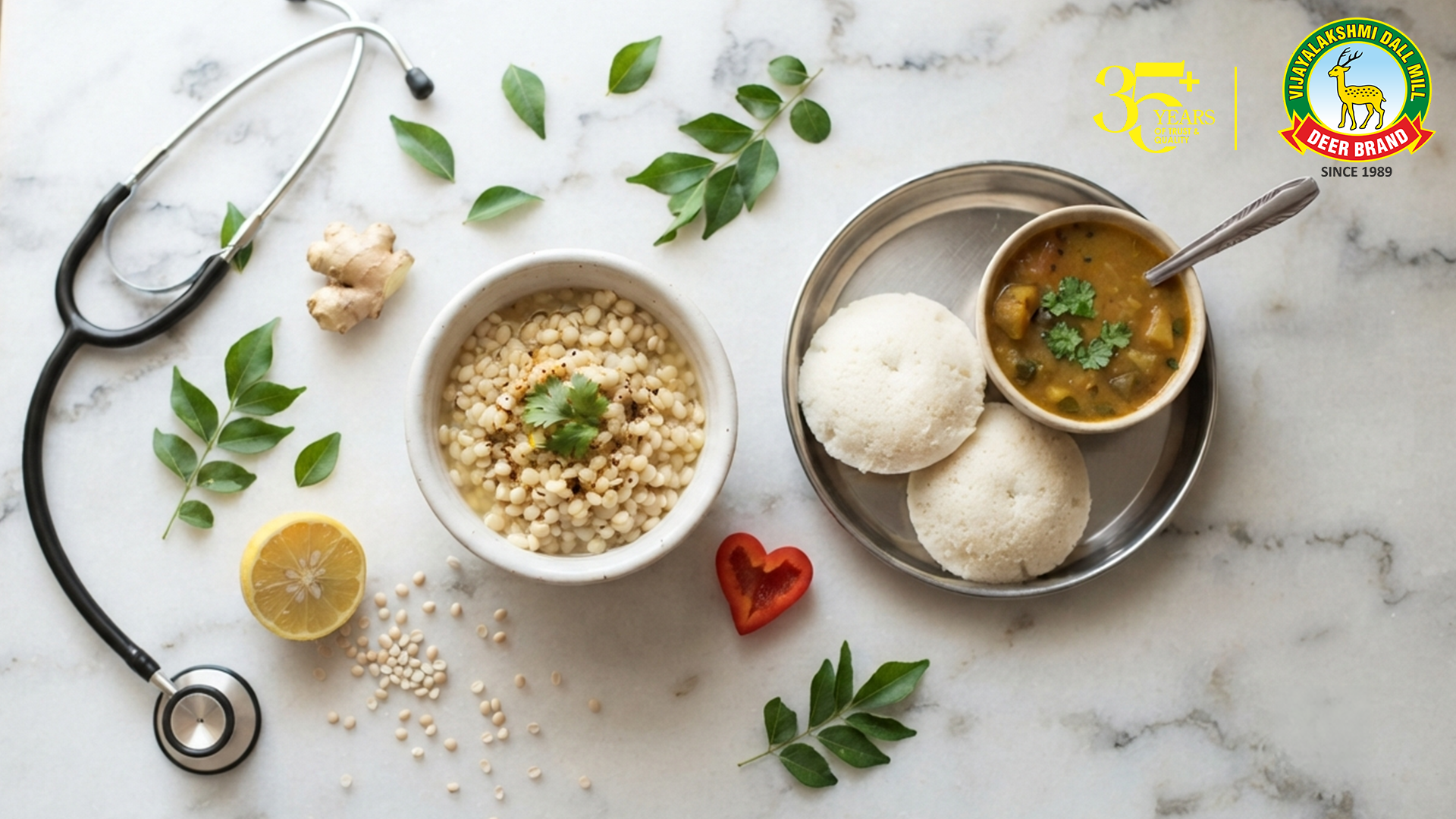
Steamed with no added fat, high in soluble fibre, provides potassium and magnesium with improved bioavailability through fermentation, and introduces beneficial gut bacteria. Two to three idlis with sambar is one of the most heart-friendly meals available in everyday Indian cooking. The sambar adds additional vegetables, fibre, and potassium.
Plain boiled urad dal with light tadka (excellent choice)
Pressure-cooked urad dal with a minimal tadka of mustard seeds, cumin, curry leaves, and a small amount of oil. Low in saturated fat, high in soluble fibre and potassium. A squeeze of lemon adds vitamin C which improves iron absorption alongside the heart health benefits.
Dosa with minimal oil (good choice)
Same fermentation benefit as idli. A plain dosa made with minimal oil on a well-seasoned pan is a heart-friendly preparation. Avoid ghee-roast or butter dosa if cholesterol management is a priority.
Dal makhani (occasional choice)
The whole black urad dal in dal makhani provides good fibre and potassium but the butter and cream add significant saturated fat which is counterproductive for cholesterol management. A modified version with reduced butter and no cream, or with curd substituted for cream, retains the heart health benefit of the dal while reducing the saturated fat load.
Medu vada (limit)
Deep fried and high in fat. The urad dal base is heart-friendly but the frying process adds significant saturated and trans fat from the oil. Occasional consumption is fine but not suitable as a daily heart health food.
How Much Urad Dal Should You Eat for Heart Health?
One to two servings of urad dal per day eaten consistently is the practical recommendation for cardiovascular health. Research on legume consumption and heart health consistently shows that it is regular, consistent consumption rather than occasional large quantities that produces measurable improvements in cholesterol and blood pressure.
A practical daily heart health plan using urad dal:
- Breakfast: two to three idlis with sambar — provides soluble fibre, potassium, and magnesium with no added saturated fat
- Lunch or dinner: one bowl of boiled urad dal with rice and minimal oil tadka — provides a second serving of cardiovascular nutrients
Alongside urad dal, limit sodium intake, avoid processed foods, eat a variety of vegetables and fruits, exercise regularly, and avoid smoking. Diet is one part of cardiovascular health management, not the whole picture.
Frequently Asked Questions
Is urad dal good for cholesterol? Yes. The soluble fibre in urad dal binds to cholesterol in the digestive tract and helps remove it from the body, which reduces LDL cholesterol over time. Regular daily consumption of urad dal as part of a heart-healthy diet is associated with improved cholesterol levels. Fermented preparations like idli are particularly good because the fermentation process improves the bioavailability of the heart-healthy nutrients in the dal.
Which dal is best for heart health? Urad dal is one of the best dals for heart health because of its combination of high soluble fibre, high potassium, and high magnesium, all of which support healthy cholesterol levels and blood pressure. Moong dal is also a good heart-healthy choice and is easier to digest. Both should be included regularly as part of a varied diet for the best cardiovascular benefit.
Is idli good for heart patients? Yes. Idli made from fermented urad dal batter is one of the most heart-friendly foods in everyday Indian cooking. It is steamed with no added fat, high in fibre and potassium, easy to digest, and the fermentation improves nutrient bioavailability. Eating idli with sambar rather than with high-sodium or high-fat accompaniments maximises the heart health benefit.
Can urad dal lower blood pressure? The potassium and magnesium content of urad dal both support healthy blood pressure regulation. Potassium helps counteract the blood pressure-raising effects of sodium. Magnesium supports the relaxation of blood vessel walls. Regular consumption of urad dal as part of a diet that is also low in sodium and high in vegetables is a practical dietary strategy for blood pressure management.
Is dal makhani bad for heart health? The urad dal base of dal makhani is heart-friendly but the butter and cream added in traditional recipes are high in saturated fat which can raise LDL cholesterol. A modified dal makhani with significantly reduced butter and cream, or with curd substituted for cream, retains the heart health benefits of the dal while reducing the saturated fat load. Occasional traditional dal makhani as part of an otherwise heart-healthy diet is fine.
The Bottom Line
Vijayalakshmi urad dal is one of the most heart-friendly foods in everyday Indian cooking. Its soluble fibre supports cholesterol reduction, its potassium supports healthy blood pressure, its magnesium supports heart muscle function, and its low saturated fat content makes it a genuinely heart-healthy protein source. Fermented preparations like idli maximise these benefits through improved nutrient bioavailability and the addition of gut health benefits that reduce systemic inflammation.
The key is consistency. Eating urad dal every day in simple, low-fat preparations like idli and boiled dal is what produces measurable improvements in cardiovascular health markers over time. Start with good quality naturally processed dal that retains its full fibre and mineral profile.
For urad dal that delivers complete cardiovascular nutrition in every serving, buy Vijayalakshmi Deer Brand natural urad dal — available in 500g, 1kg, and 5kg packs on JioMart, Amazon, and Flipkart.
Published by the Deer Brand Team — Vijayalakshmi Dall Mills, manufacturers of premium natural urad dal in Tenali, Andhra Pradesh since 1989.