Best Urad Dal for Dosa Batter: Whole, Split or Dehusked?
If your dosas are coming out soft when they should be crispy, or the batter is not spreading evenly on the pan, or the fermentation is inconsistent from batch to batch, the variety of urad dal you are using is almost certainly part of the answer. Most recipes simply say urad dal without specifying which type, and that gap in information leads to a lot of frustration.
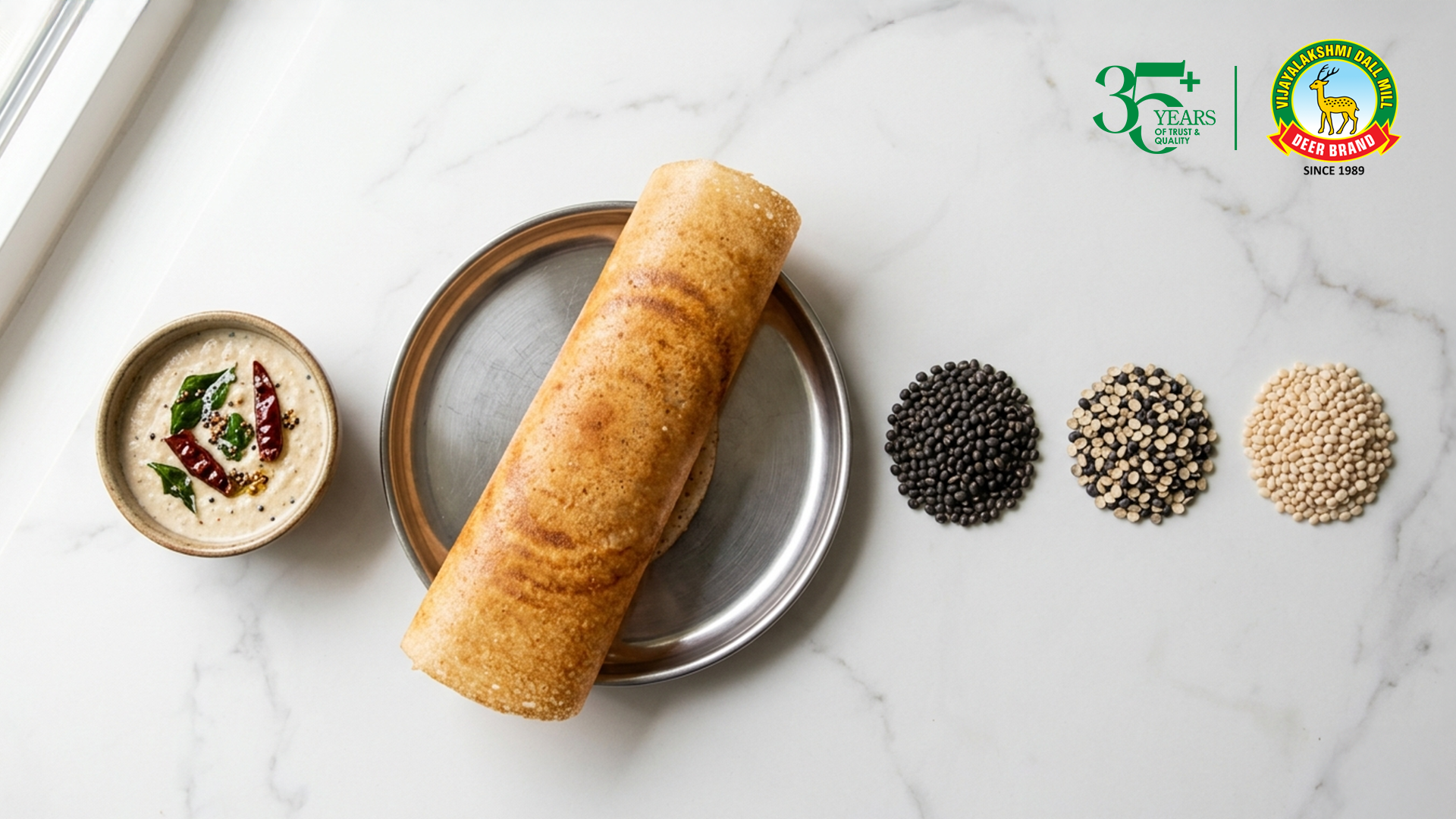
There are three main forms of urad dal available for dosa batter: whole black urad dal with the skin intact, split urad dal with the skin on, and white dehusked urad dal with the skin removed. Each produces a different batter with different fermentation characteristics and a different final texture on the pan. This post explains exactly which variety works best for dosa and why.
Which Urad Dal Is Best for Dosa Batter?
White dehusked urad dal is the best choice for dosa batter. It produces a batter that ferments reliably, grinds to a smooth consistency, and spreads thinly and evenly on a hot pan. The result is a dosa with a crispy exterior, even browning, and the characteristic slightly tangy flavour that comes from proper fermentation.
The reason white dehusked urad dal outperforms other varieties for dosa specifically is its mucilage content and its grinding behaviour. When the outer skin is removed during processing, the grain grinds more smoothly and the mucilage disperses more evenly through the batter, producing a more consistent fermentation and a thinner, more spreadable batter.
How Does Each Variety of Urad Dal Perform in Dosa Batter?
White dehusked urad dal
This is the standard variety used across South India for dosa batter. The skin has been removed during processing, leaving a clean white grain that grinds to a smooth, fine paste.
Performance in dosa batter:
- Grinds to a very smooth, fine paste that spreads thinly and evenly on the pan
- Ferments reliably within 8 to 10 hours at room temperature
- Produces a batter with good aeration that results in a light, crispy dosa
- The absence of the skin means the batter is thinner and more spreadable than whole dal batter
- Standard dosa ratio is 1 part white urad dal to 3 to 4 parts rice
Verdict: Best overall choice for dosa batter. Consistent, reliable, and produces the crispiest result.
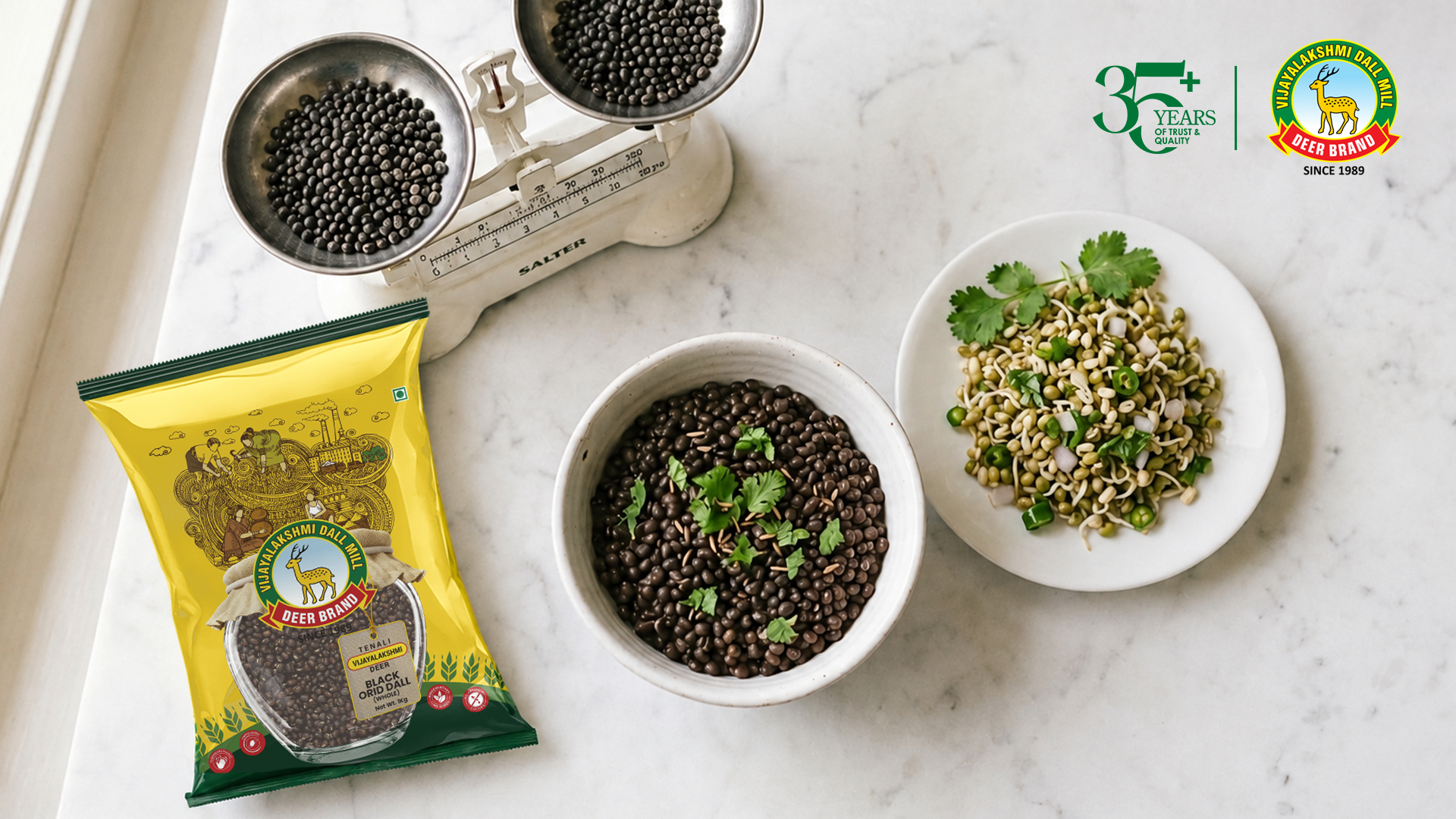
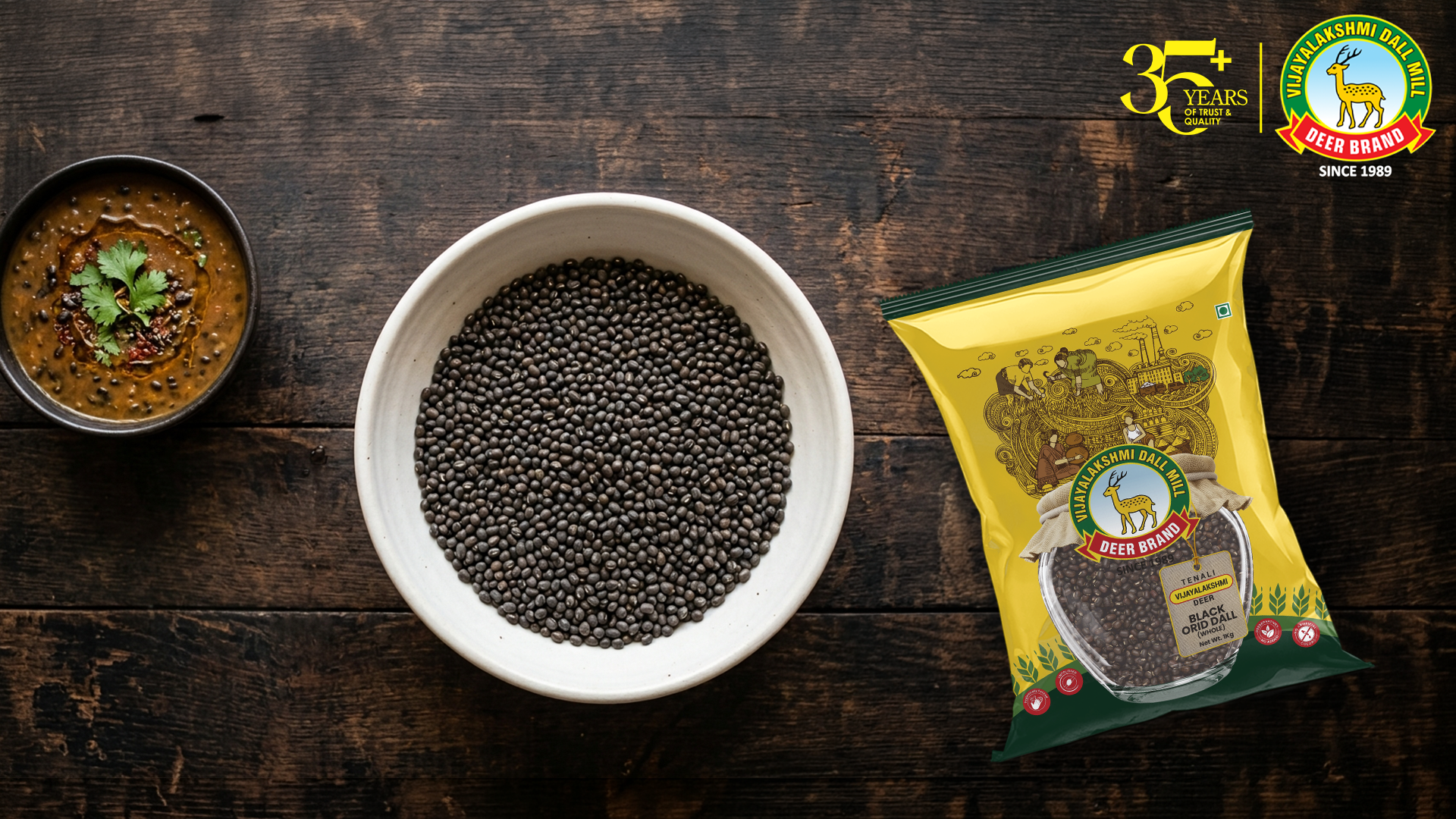
Whole black urad dal
The entire grain with the dark outer skin intact. This is the most nutritionally complete form of urad dal because the bran layer contains additional fibre and minerals.
Performance in dosa batter:
- The skin makes the batter slightly heavier and coarser than white dal batter
- Ferments well because the bran layer contains the natural mucilage that drives fermentation
- Produces a dosa with a slightly thicker, more textured surface
- The colour of the batter is slightly off white or cream rather than pure white
- Some experienced cooks prefer this variety for its earthier flavour and higher nutritional content
- Requires longer grinding to achieve a smooth consistency
Verdict: A good alternative for those who prefer the nutritional profile of whole grain dal. Produces a slightly different dosa texture that some prefer. Not the standard choice but perfectly viable.
Split urad dal with skin
The grain split in half with the dark skin still on. Less commonly used for dosa batter than the other two varieties.
Performance in dosa batter:
- Has less mucilage than whole urad dal because splitting exposes the inner grain and accelerates mucilage loss during storage
- Fermentation can be less reliable than whole or dehusked varieties
- Grinds more easily than whole dal but not as smoothly as white dehusked dal
- Produces a batter that is acceptable but less consistent than the other two varieties
Verdict: Not the recommended choice for dosa batter. Use white dehusked or whole black urad dal instead.
Split white urad dal
Dehusked and split into halves. Commonly used for papad making.
Performance in dosa batter:
- Very low mucilage content due to both dehusking and splitting
- Poor fermentation performance
- Not suitable for dosa or idli batter
Verdict: Do not use for dosa batter.
What Is the Best Dal to Rice Ratio for Dosa Batter?
The ratio of urad dal to rice affects the texture and crispiness of the dosa significantly. For dosa specifically the ratio is different from idli batter because dosa requires a thinner, crispier result.
- 1:3 ratio (1 part urad dal to 3 parts rice): Produces a thicker batter that makes softer dosas. Good for set dosa or soft dosa varieties.
- 1:4 ratio (1 part urad dal to 4 parts rice): The standard ratio for crispy plain dosa. This is the most commonly used ratio across South Indian households and restaurants.
- 1:5 ratio (1 part urad dal to 5 parts rice): Produces a very thin, very crispy dosa. Good for paper dosa but requires more skill in spreading and temperature control.
For everyday crispy dosa at home, the 1:4 ratio with white dehusked urad dal is the most reliable starting point.
Does the Quality of White Urad Dal Affect Dosa Results?
Yes, significantly. Two packets of white dehusked urad dal from different sources can produce very different dosa results even with the same recipe and technique.
Here is what quality differences look like in practice:
- Freshness: Fresh white urad dal with active mucilage produces a batter that ferments within 8 hours and spreads thinly on the pan. Old dal produces a batter that takes longer to ferment and often results in dosas that are less crispy and more prone to tearing.
- Processing method: Naturally processed dal without chemical polishing agents retains more of its natural properties. Chemically polished dal may look brighter white but performs worse in fermentation and batter consistency.
- Grain uniformity: Dal with consistent grain size grinds more evenly and produces a more homogeneous batter. Dal with a mix of whole grains, broken pieces, and powder grinds unevenly and produces an inconsistent batter.
For dosa batter that ferments reliably and produces consistently crispy results, the quality of the white urad dal is as important as the technique. For naturally processed white urad dal, buy Deer Brand natural urad dal — available on JioMart, Amazon, and Flipkart.
How to Grind Urad Dal for the Best Dosa Batter
The grinding method for dosa batter is slightly different from idli batter because dosa requires a thinner, more spreadable consistency.
- Soak white urad dal for 4 to 6 hours separately from the rice
- Soak the rice for the same time in a separate bowl
- Drain both completely before grinding
- Grind the urad dal first with minimal water until smooth and slightly airy
- The urad dal batter for dosa can be slightly thinner than for idli it should pour in a thick ribbon rather than fall in a heavy blob
- Grind the rice separately to a slightly coarse paste
- Combine both batters, add salt, and mix well
- Ferment for 8 to 10 hours in a warm spot
- After fermentation the batter should have risen visibly and smell faintly tangy
- Before making dosas, add a small amount of water if needed to bring the batter to a thin, pourable consistency that spreads easily on the pan
For a complete step by step guide to making perfect idli and dosa batter, read our post on how to make perfect idli batter at home.
Why Is My Dosa Not Crispy?
The most common causes of dosas that are soft instead of crispy:
- Batter too thick: Dosa batter needs to be thinner than idli batter. If it does not spread easily when poured on the pan it is too thick. Add a small amount of water and mix before the next dosa.
- Pan not hot enough: The pan must be at the right temperature before the batter is poured. Test by sprinkling a few drops of water on the pan. They should evaporate immediately with a sizzle. If they sit and steam slowly the pan is not hot enough.
- Too much oil: A light smear of oil is sufficient. Too much oil prevents the dosa from crisping up and causes it to slide rather than spread.
- Batter under fermented: Under fermented batter does not develop the right acid structure that contributes to crispiness. The batter must have visibly risen and smell faintly tangy before use.
- Wrong dal variety: Whole black urad dal or split dal produces a heavier batter that is harder to spread thinly. White dehusked urad dal produces the thin, spreadable batter that crispy dosa requires.
Frequently Asked Questions
Can I use whole urad dal for dosa batter? Yes. Whole black urad dal with the skin intact can be used for dosa batter and some cooks prefer it for its earthier flavour and higher nutritional content. The result is a slightly thicker, more textured dosa rather than the thin crispy variety. For classic paper-thin crispy dosa, white dehusked urad dal is the better choice.
What is the difference between idli batter and dosa batter? The primary differences are the ratio of urad dal to rice and the final consistency. Idli batter uses a higher proportion of urad dal, typically 1:3, and is kept thick. Dosa batter uses a lower proportion of urad dal, typically 1:4, and is thinned further before use. Both use the same fermented base but the consistency and spreading technique differ.
Why is my dosa batter not spreading on the pan? The batter is too thick. Add a small amount of water and mix well. Dosa batter should pour easily from a ladle and spread when you move the ladle in concentric circles on the pan. If it does not move with the ladle it needs more water. Also make sure the pan is at the right temperature and lightly oiled before pouring.
How long does dosa batter last in the fridge? Fermented dosa batter keeps well in the refrigerator for 3 to 4 days in an airtight container. The batter continues to ferment slowly in the fridge and becomes more sour over time. Slightly sour batter actually produces crispier dosas than freshly fermented batter, which is why day old batter often produces better results than fresh batter.
Does the type of rice matter for dosa batter? Yes. Idli rice, which is parboiled short-grain rice, is the standard choice for dosa batter. Raw rice produces a slightly different texture. Some cooks use a combination of idli rice and raw rice for dosa. Avoid using only basmati rice as it produces a batter that does not ferment as well and spreads differently on the pan.
The Bottom Line
White dehusked urad dal is the best choice for dosa batter. It grinds smoothly, ferments reliably, and produces the thin spreadable batter that results in crispy, evenly browned dosas. A 1:4 ratio of white urad dal to idli rice is the most reliable starting point for everyday crispy dosa at home.
The quality of the white urad dal matters as much as the variety. Fresh, naturally processed dal without chemical polishing agents produces consistently better dosa batter than old or over-processed dal. For urad dal that delivers consistent dosa results, shop Deer Brand products — processed at our Tenali mills since 1989 and available on JioMart, Amazon, and Flipkart.
Published by the Deer Brand Team — Vijayalakshmi Dall Mills, manufacturers of premium natural urad dal in Tenali, Andhra Pradesh since 1989.