Urad Gota vs White Urad Dal: What Is the Difference?
If you have ever stood in a grocery store or scrolled through an online grocery app looking at urad dal options and felt confused by the different varieties available, you are not alone. Urad gota, whole urad, white urad dal, split urad, dehusked urad — the terminology can be overwhelming, and most people simply pick whatever is familiar without understanding what the differences actually mean for nutrition and cooking.
This post covers the most important distinction in the urad dal category: the difference between urad gota (whole black gram with the skin intact) and white urad dal (dehusked white gram). Understanding this difference helps you make better choices for your specific cooking and health needs.
What Is Urad Gota?
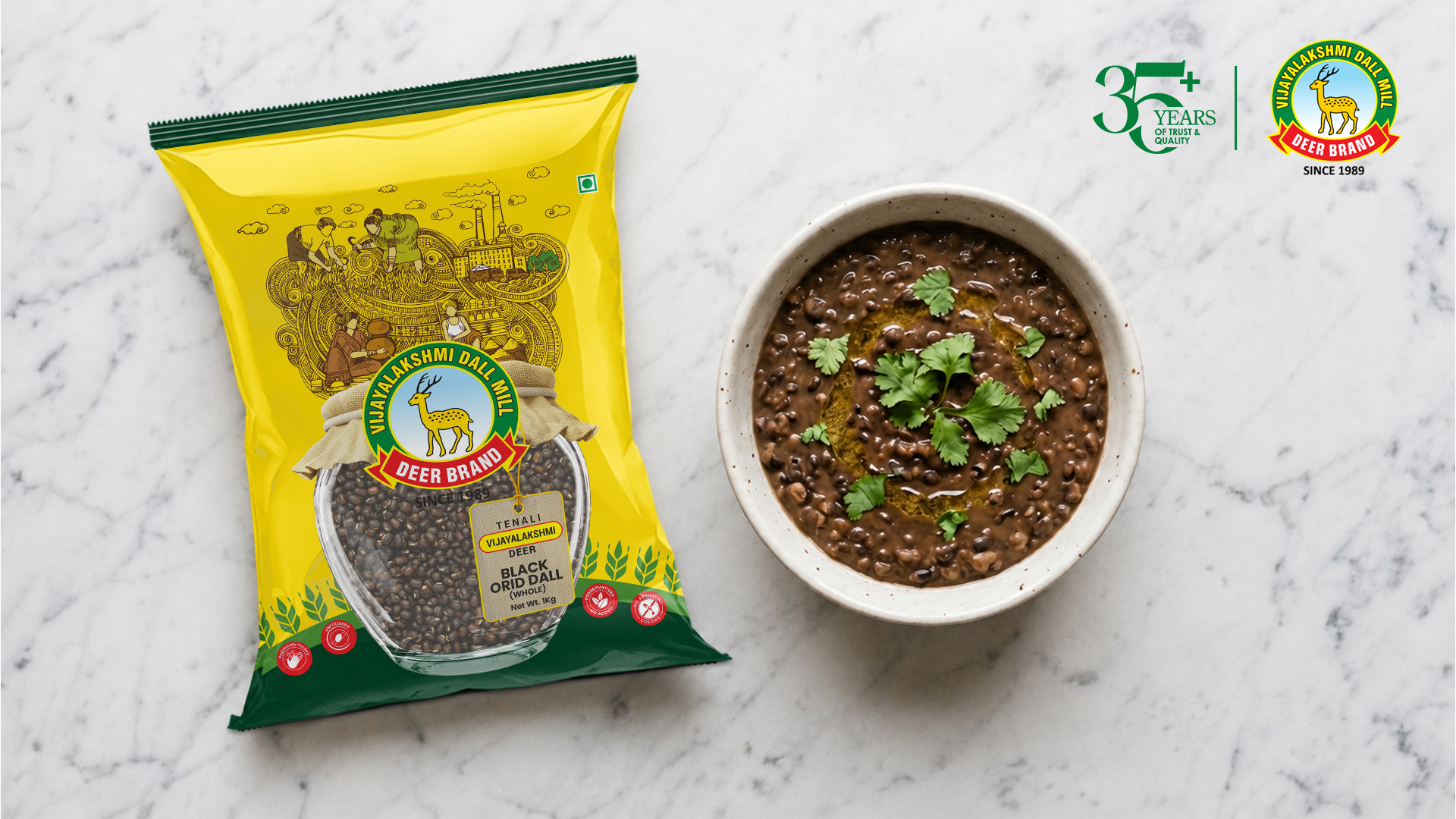
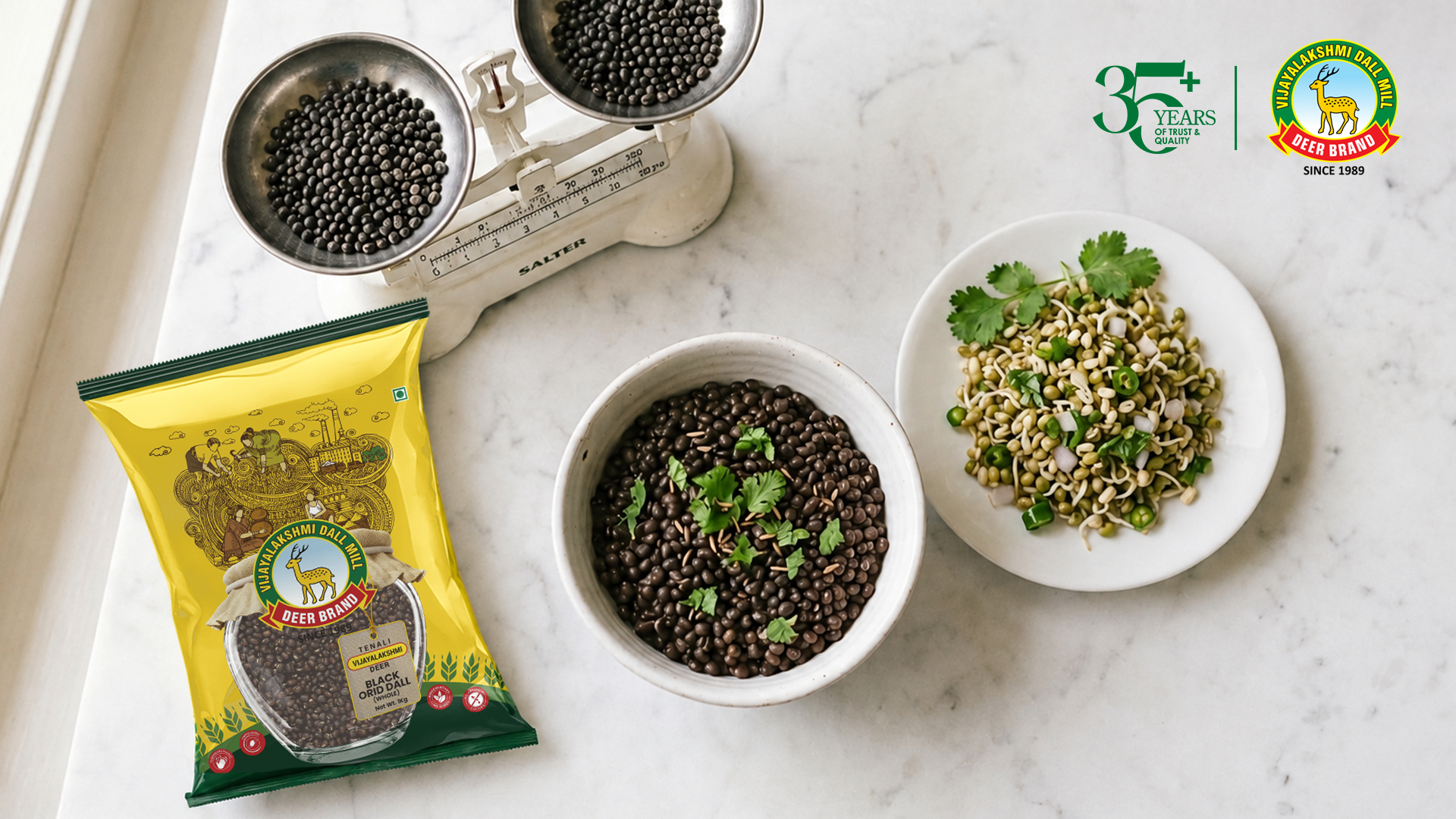
Urad gota is the whole, unprocessed grain of black gram (Vigna mungo) with its natural dark outer skin intact. The word gota means whole in several Indian languages, which is exactly what this is: the complete grain with nothing removed.
The outer skin of urad gota is dark black or deep grey in colour, giving the dal its characteristic appearance. This skin is not just cosmetic. It contains:
- Dietary fibre concentrated in the bran layer
- Natural oils that contribute to flavour and shelf life
- Minerals including iron, calcium, and magnesium
- Natural mucilage that drives fermentation
- Antioxidants and beneficial compounds in the outer layer
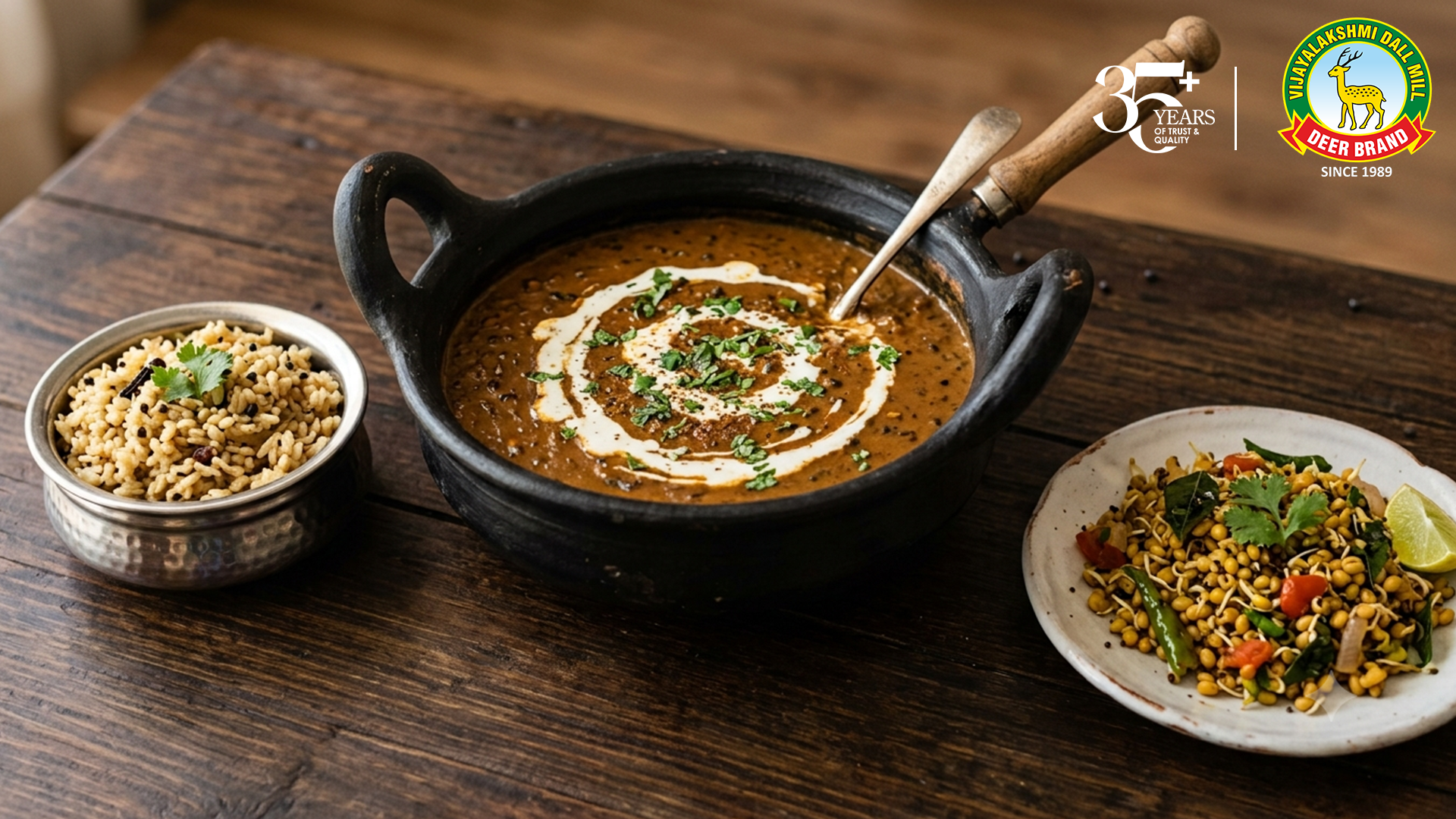
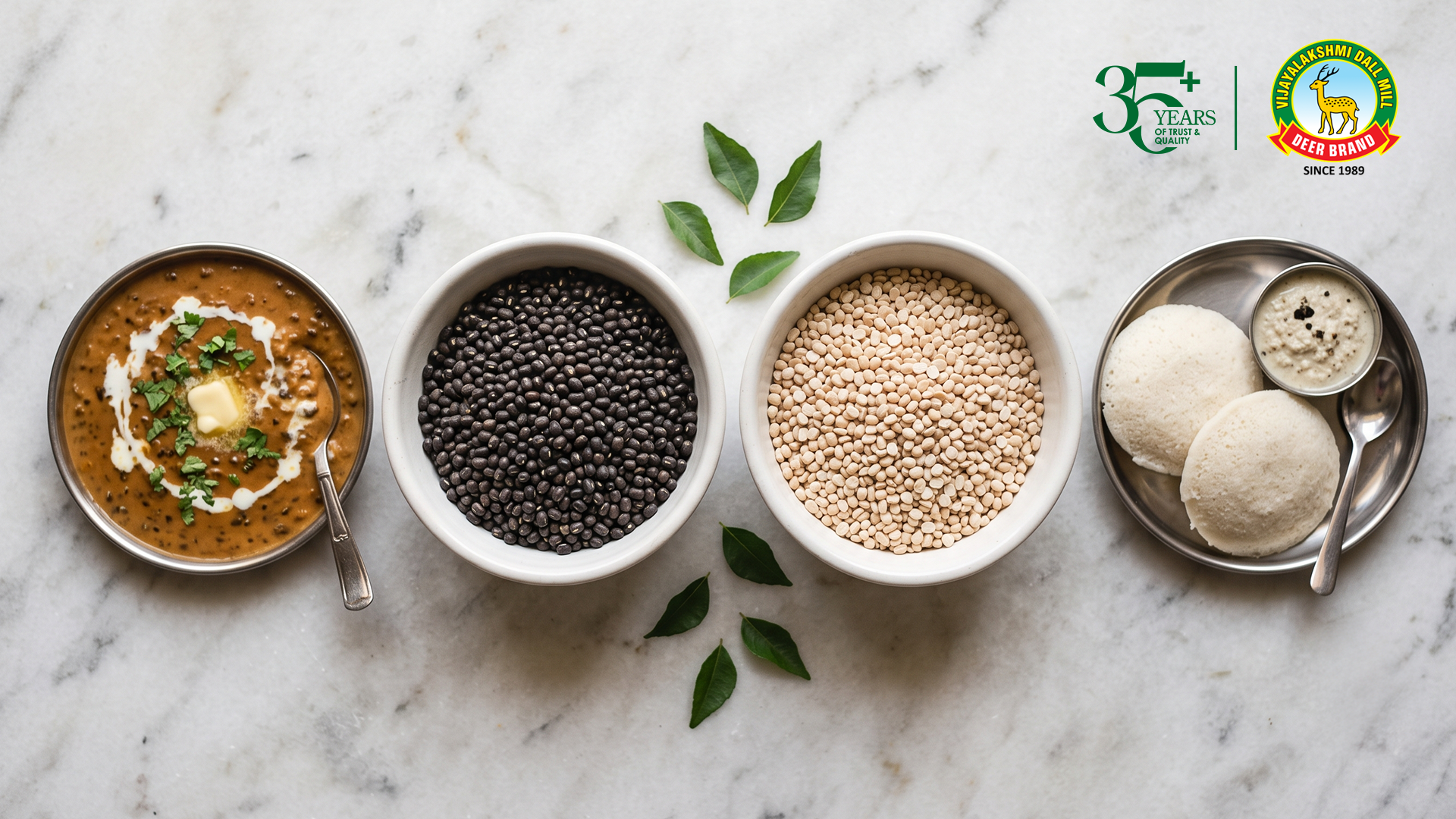
Urad gota is the form of urad dal used for dal makhani, the iconic North Indian slow-cooked dish. It is also the form recommended for sprouting, as the intact germ in the skin allows germination.
What Is White Urad Dal?
White urad dal is urad gota that has been processed to remove the dark outer skin. The dehusking process splits the grain and removes the skin, leaving the inner white or cream-coloured grain. This is why it is called white urad dal or dhuli urad dal.
White urad dal is the standard variety used across South India for idli, dosa, and medu vada batter. The reason it is preferred for these preparations is that without the heavy outer skin, the dal grinds more smoothly and the mucilage disperses more evenly through the batter, producing a lighter, more airy result.
White urad dal is available in two forms:
- Whole white urad dal: Dehusked but not split, the grain is intact but without the skin
- Split white urad dal: Dehusked and split into halves, used for papad making and some dal preparations
Key Differences Between Urad Gota and White Urad Dal
Appearance
Urad gota is dark black or deep grey with a slightly rough, matte surface. White urad dal is cream white with a smoother surface. The colour difference is immediately visible and is the easiest way to distinguish the two.
Nutritional profile
Urad gota is the more nutritionally complete form because the outer skin is retained. The skin contains fibre, natural oils, minerals, and antioxidants that are partially lost during the dehusking process.
Here is how they compare per 100g:
- Dietary fibre: Urad gota has a higher fibre content due to the intact bran layer in the skin
- Iron: Urad gota retains more iron as iron is concentrated in the outer layers of the grain
- Calcium: Similar in both but slightly higher in urad gota
- Magnesium: Similar in both but slightly higher in urad gota
- Protein: Approximately equal at around 25g per 100g in both forms
- Mucilage: Present in both but slightly more intact in urad gota
Cooking uses
The two varieties have quite different primary cooking applications:
Urad gota is used for:
- Dal makhani — the slow-cooked North Indian classic
- Sprouting — the intact skin contains the germ needed for germination
- Simple boiled whole dal preparations
- Traditional Ayurvedic postpartum preparations
White urad dal is used for:
- Idli batter — standard South Indian preparation
- Dosa batter — same preparation
- Medu vada — thick batter for deep fried fritters
- Urad dal chutney — ground with coconut and spices
- Papad making (split white variety)
Cooking time
Urad gota takes significantly longer to cook than white urad dal due to the intact outer skin. It needs overnight soaking and longer pressure cooking to become fully soft. White urad dal cooks more quickly because the skin has been removed.
Fermentation
Both varieties contain mucilage that drives fermentation, but white urad dal is the standard choice for idli and dosa because without the skin it grinds to a smoother, finer paste that ferments more evenly and produces a lighter batter. Urad gota can be used for fermentation but produces a slightly denser batter with a different character.
Digestibility
White urad dal is easier to digest than urad gota because the outer skin, which contains complex fibre compounds, has been removed. Urad gota is harder to digest and benefits from soaking, thorough cooking, and the addition of digestive spices like cumin, ginger, and asafoetida.
Flavour
Urad gota has a more earthy, nutty, robust flavour due to the compounds in the outer skin. White urad dal has a milder, creamier flavour. Dal makhani made with urad gota has a depth of flavour that cannot be replicated with white urad dal. Idli made with white urad dal has the light, clean flavour associated with the dish.
Which Is More Nutritious: Urad Gota or White Urad Dal?
Urad gota is the more nutritionally complete form because the outer skin is retained. The skin contains dietary fibre, natural oils, minerals, and antioxidants that are partially lost during the dehusking process that produces white urad dal.
However this does not mean white urad dal is nutritionally poor. Both are highly nutritious legumes with similar protein content and meaningful mineral profiles. The differences are in the details rather than in the overall nutritional quality.
For people who are specifically focused on maximising fibre intake, mineral bioavailability, and overall nutritional completeness, urad gota is the better choice. For people who make idli and dosa regularly and want the best fermentation performance and digestibility, white urad dal is the appropriate choice.
The most nutritionally sophisticated approach is to use both regularly for their different purposes: urad gota for dal makhani, sprouting, and whole dal preparations; white urad dal for idli, dosa, and medu vada. This gives you the broadest nutritional coverage while taking advantage of the specific cooking properties of each variety.
“For a complete guide on all the health benefits of Vijayalakshmi Deer Brand urad gota, read our post on Vijayalakshmi Deer Brand urad gota: health benefits you should know.”
For the complete nutritional breakdown of urad dal including all minerals and vitamins, read our post on urad dal nutrition facts per 100g.
Which Is Better for Specific Health Goals?
For bone health:
Urad gota has a slight edge because of its higher fibre and mineral content from the intact skin. For a complete guide on urad dal and bone health, read our post on how Vijayalakshmi urad dal helps keep your bones strong.
For gut health:
Both are good but for different reasons. White urad dal in fermented form as idli is excellent for gut health through its probiotic benefit. Urad gota provides more dietary fibre for prebiotic gut bacteria feeding. For a complete guide read our post on is urad dal good for your gut.
For breastfeeding mothers:
Urad gota is traditionally recommended in Ayurvedic postpartum practice for its nourishing, building properties. The intact skin adds nutritional completeness appropriate for the elevated demands of lactation. For a complete guide read our post on is Vijayalakshmi Deer Brand urad gota good for breastfeeding mothers.
For weight loss:
Both are suitable. White urad dal in fermented form as idli has a lower glycaemic impact due to fermentation. Urad gota has more fibre which supports satiety. For a complete guide read our post on is urad dal good for weight loss.
For blood sugar management:
Both have low to moderate glycaemic indices. White urad dal in fermented form has the lowest glycaemic impact of any preparation. For a complete guide read our post on urad dal and blood sugar: what you should know.
Vijayalakshmi Deer Brand: Available in Both Varieties
Vijayalakshmi Dall Mills processes both urad gota and white urad dal at its ISO and HACCP certified processing units in Tenali, Guntur District. Both varieties are naturally processed without chemical polishing agents or additives.
For urad gota specifically, the natural processing means the outer skin is retained in its natural state without chemical treatment. This preserves the full nutritional profile of the whole grain from farm to pack.
For white urad dal, the natural dehusking process removes the skin mechanically without chemical agents, and the resulting white dal is not additionally polished with chemicals to brighten its appearance. This retains more of the natural mucilage that drives fermentation compared to chemically polished alternatives.
For naturally processed urad gota and white urad dal, buy Vijayalakshmi Deer Brand natural urad dal — available in 500g, 1kg, and 5kg packs on JioMart, Amazon, and Flipkart.
Frequently Asked Questions
Can I substitute urad gota for white urad dal in idli batter? You can but the result will be different. Urad gota produces a heavier, denser batter that ferments differently and results in idlis with a different texture than the classic soft, airy idli made from white urad dal batter. For classic idli and dosa, white urad dal is the correct choice.
Can I use white urad dal for dal makhani? Dal makhani is traditionally made with whole urad gota. The slow cooking process breaks down the whole grain into a creamy, rich gravy that is characteristic of the dish. White urad dal produces a very different result and does not replicate the authentic dal makhani texture and flavour.
Which is easier to cook, urad gota or white urad dal? White urad dal is easier and faster to cook because the skin has been removed. Urad gota requires overnight soaking and longer pressure cooking to soften fully. For everyday quick cooking, white urad dal is the more convenient choice. For slow-cooked preparations like dal makhani, the longer cooking time of urad gota is part of what makes the dish special.
“For complete step by step cooking methods for urad gota including dal makhani, khichdi and stir fry, read our post on how to cook urad gota at home.”
Is urad gota the same as black lentils? Urad gota is sometimes called black lentils in English but it is technically whole black gram (Vigna mungo), which is a different species from true lentils (Lens culinaris). The name black lentils is commonly used in restaurant menus and recipe books to describe urad gota, particularly in the context of dal makhani.
Why does urad gota turn the cooking water dark? The dark colour in the soaking and cooking water comes from the natural pigments in the outer skin of urad gota. This is completely normal and not a sign of contamination or poor quality. The water darkens significantly during soaking. This dark water should be discarded and the dal rinsed before cooking.
The Bottom Line
Urad gota and white urad dal are two forms of the same grain at different stages of processing. Urad gota retains its outer skin and is more nutritionally complete, more flavourful, and appropriate for specific preparations like dal makhani, sprouting, and traditional postpartum cooking. White urad dal has had its skin removed and is the standard choice for idli, dosa, and medu vada because of its superior fermentation and grinding properties.
The smartest approach is to keep both in your kitchen and use each for what it does best. Both varieties are available from Vijayalakshmi Deer Brand, naturally processed at our Tenali mills since 1989.
For naturally processed urad gota and white urad dal, shop Vijayalakshmi Deer Brand products — available on JioMart, Amazon, and Flipkart.
Published by the Deer Brand Team — Vijayalakshmi Dall Mills, manufacturers of premium natural urad dal in Tenali, Andhra Pradesh since 1989.