Unpolished vs Polished Urad Dal: Which Is Better for Health and Taste?
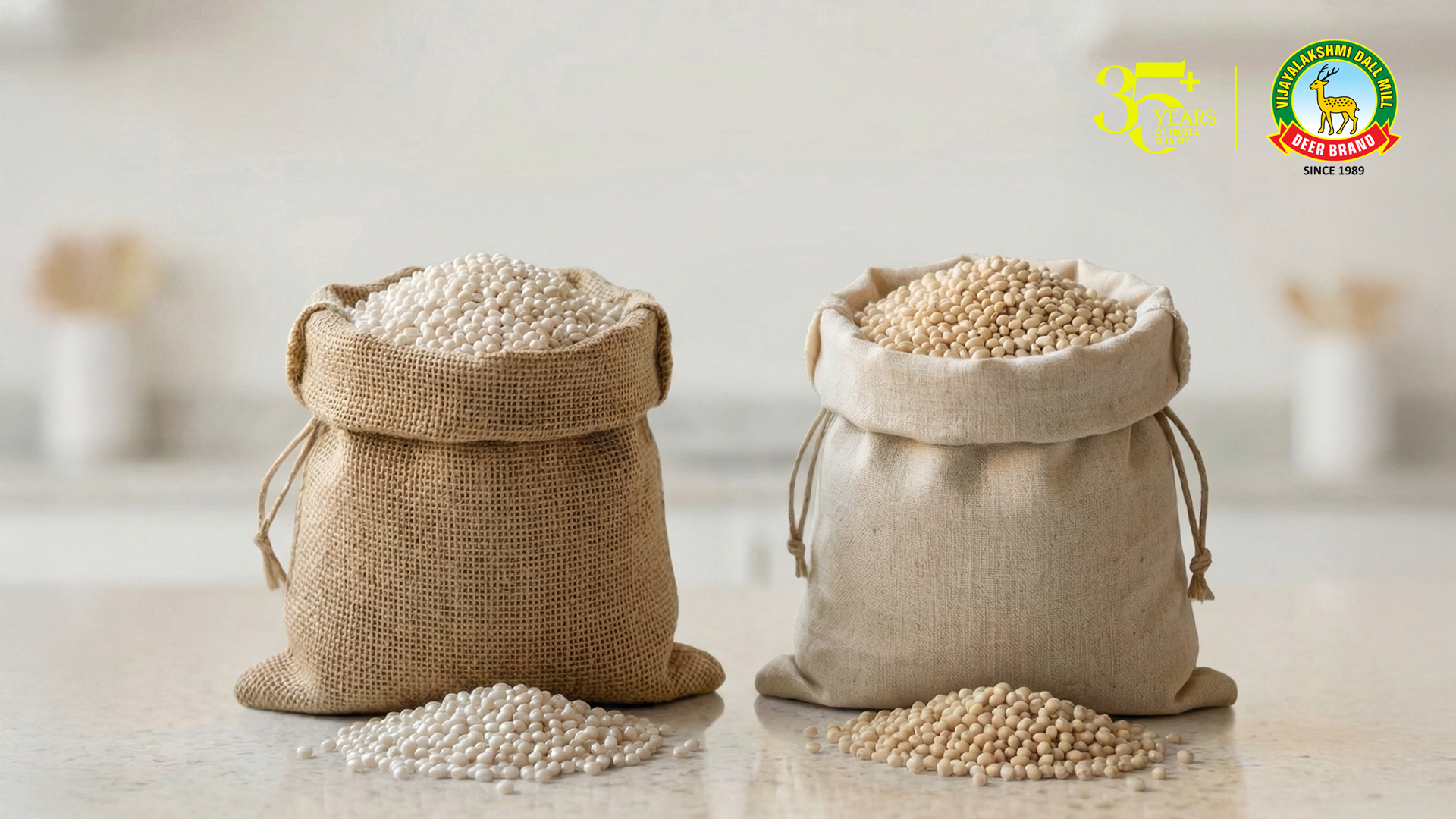
If you’ve ever stood in a grocery store comparing two bags of urad dal, one bright white and shiny, the other matte and cream-coloured, you’ve already encountered the polished vs unpolished question without knowing it. Most people pick the shiny one assuming it’s cleaner or higher quality. It’s actually the opposite.
This guide breaks down exactly what polishing does to urad dal, how it affects your cooking and your health, and why the less glamorous-looking bag is almost always the better choice.
What Does “Polished” Mean in Urad Dal?
Polished urad dal has had its outer bran layer partially or fully removed through a mechanical or chemical process. The result is a grain that looks brighter, whiter, and more uniform but has lost a significant portion of its natural nutrition and cooking properties in the process.
Unpolished urad dal, by contrast, retains its natural bran layer. It looks slightly rough, matte, and off-white rather than gleaming white. What it lacks in visual appeal it more than makes up for in nutrition, fermentation performance, and flavour.
How Is Urad Dal Polished?
There are three common polishing methods used in the industry, and most consumers have no idea which one was used on the dal they’re buying:
Water polishing The dal is tumbled with water to remove the outer bran layer and create a cleaner appearance. This is the mildest form of polishing but still strips away surface nutrients and reduces the natural mucilage content.
Oil polishing A thin coating of refined oil is applied to the dal surface during processing. This gives it a shiny, premium appearance and extends shelf life visually. The problem is that the oil coats the grain and interferes with water absorption during soaking, which directly affects fermentation.
Chemical polishing Some suppliers use mild chemical agents to whiten and brighten dal. This is the most aggressive form and leaves residues that cannot be washed off completely. Chemical polishing is not always declared on packaging.
The unfortunate reality is that polishing is done primarily for appearance, to make dal look cleaner and more premium on the shelf. It has no nutritional benefit whatsoever. Every form of polishing removes something from the grain without adding anything back.
What Does Polishing Remove?
When the bran layer is stripped from urad dal, here is what gets lost:
Dietary fibre The bran layer is where the majority of urad dal’s fibre is stored. Unpolished whole urad dal contains around 26 to 28g of dietary fibre per 100g. Heavily polished dal can lose a significant portion of this, reducing the gut health and blood sugar benefits that make urad dal nutritionally valuable.
Mucilage This is the most important loss for anyone who cooks idli or dosa. Mucilage is a natural gel-like compound found in the bran layer that is entirely responsible for how well urad dal batter ferments. Without sufficient mucilage, your batter will not rise properly regardless of how long you soak or how carefully you grind. This is the single biggest reason home cooks struggle with flat idlis. They are unknowingly using polished dal.
Natural oils The bran layer contains the grain’s natural oils, which contribute to the characteristic earthy, nutty aroma of fresh urad dal. Polished dal often smells neutral or faintly chemical. These natural oils also play a role in the texture and flavour of the cooked grain.
B vitamins and minerals Iron, magnesium, phosphorus, and B vitamins are concentrated in and around the bran layer. Polishing reduces the bioavailability of these nutrients even when some amount remains in the grain.
How Polishing Affects Your Cooking
The difference between polished and unpolished urad dal shows up most clearly in three areas:
Fermentation Unpolished urad dal ferments reliably and consistently. The mucilage in the bran drives the natural fermentation process, producing a batter that visibly rises, turns airy, and smells faintly tangy within 8 to 12 hours. Polished dal produces a denser, flatter batter that often fails to rise adequately, particularly in cooler weather or air-conditioned kitchens. If your idli batter has been inconsistent, switching from polished to unpolished dal resolves the issue in most cases without changing anything else about your method. For a step by step idli recipe that uses natural urad dal, read our recipe for soft and fluffy idli at home.
Texture of cooked idli and dosa Idlis made with unpolished urad dal are softer, lighter, and more spongy. The airy batter produced by proper fermentation traps steam during cooking, creating the characteristic holes and fluffy texture. Idlis made with polished dal tend to be denser and slightly rubbery, even when cooked correctly.
Taste Unpolished dal has a more pronounced, slightly nutty flavour that comes through in the finished idli and dosa. Polished dal tastes comparatively bland. This is subtle but noticeable, especially if you’ve ever had idlis from a South Indian restaurant that uses high-grade natural dal.
How to Tell Polished from Unpolished at a Glance
You don’t need to run a lab test. Here are the visual differences:
Unpolished urad dal
- Matte, slightly rough surface
- Off-white to cream colour
- Natural variation in grain shade
- Slightly earthy smell when you open the bag
- Feels firm and slightly rough when rubbed between fingers
Polished urad dal
- Shiny, smooth surface
- Bright, uniform white colour
- Too-perfect appearance, looks processed
- Neutral or faintly chemical smell
- Feels slightly slippery or leaves white powder on fingers
For a more detailed quality check with five tests you can run at home, read our guide on how to check urad dal quality at home.
Does Unpolished Urad Dal Have Any Disadvantages?
Honestly, very few. The main ones are cosmetic:
- It looks less uniform and “premium” on the shelf
- It may have slightly more natural variation in colour between grains
- Shelf life can be marginally shorter if stored incorrectly, because the natural oils in the bran can go rancid over time
None of these are real cooking disadvantages. Proper storage in an airtight container away from moisture solves the shelf life question entirely. The visual variation is simply what natural, unprocessed food looks like.
Why Deer Brand Urad Dal Is Processed Naturally
Vijayalakshmi Dall Mills has been processing dal in Tenali, Guntur District since 1989. The Deer Brand range is positioned as natural and unpolished across its entire product line. The website title itself describes it as “Natural and Unpolished” and the processing reflects that commitment.
No artificial chemicals, hormones, or antibiotics are used at any stage. The focus is on retaining the original texture, nutrition, and natural properties of the grain from farm to pack, which is exactly what matters most for idli and dosa batter performance.
Deer Brand supplies over 30,000 resellers across seven states including Andhra Pradesh, Telangana, Kerala, Karnataka, Odisha, and Delhi-NCR. That scale of consistent performance is only possible when the dal is processed under strict quality controls. The brand is ISO and HACCP certified across four production units in Tenali.
The range is also available across multiple platforms including JioMart, Amazon, and Flipkart, making it accessible regardless of where you shop. If you’ve been using a heavily processed dal and your batter has been inconsistent, it’s worth trying natural urad dal from Deer Brand and running the fermentation test on your first batch.
Frequently Asked Questions
Is unpolished urad dal better than polished? Yes, in almost every way that matters for cooking and nutrition. Unpolished urad dal retains its bran layer, which contains the mucilage responsible for fermentation, the fibre that supports gut health, and the natural oils that give dal its characteristic flavour. Polished dal loses varying amounts of all three during processing, with no nutritional benefit in return.
How do I know if my urad dal is polished or unpolished? Look at the surface. Unpolished dal is matte, slightly rough, and off-white. Polished dal is shiny, smooth, and bright white. Rub a few grains between your fingers. Polished dal often leaves a white powdery residue or feels slightly oily. The fermentation test is the definitive check: unpolished dal will produce a batter that visibly rises within 8 hours, polished dal often will not.
Does polishing affect the protein content of urad dal? Polishing primarily removes fibre, mucilage, and surface nutrients rather than core protein. The protein content of around 25g per 100g is largely retained in the grain itself. However, the loss of fibre and other nutrients means the overall nutritional profile of polished dal is meaningfully worse even if the protein numbers look similar.
Can I use polished urad dal for idli and dosa in an emergency? You can try, but results will be inconsistent. In warm weather with a long fermentation time you may get acceptable results. In cooler conditions or air-conditioned kitchens, polished dal batter often fails to rise adequately. If you have no alternative, add a small piece of poha (flattened rice) to the batter before grinding. It can partially compensate for reduced mucilage by adding some fermentation support.
The Bottom Line
Polishing makes urad dal look better and does nothing else. It removes the fibre, mucilage, and natural oils that make urad dal nutritious and functional in the kitchen. Unpolished dal costs no more, cooks better, tastes better, and is meaningfully better for your health.
The next time you’re choosing between a bright white shiny bag and a matte cream-coloured one, pick the matte one. Your idlis will tell the difference immediately.
Ready to switch to natural urad dal? Shop Deer Brand urad dal and taste the difference in your very first batch.
Published by the Deer Brand Team — Vijayalakshmi Dall Mills, manufacturers of premium natural urad dal in Tenali, Andhra Pradesh since 1989.