Vijayalakshmi Deer Brand Urad Dal for Healthy Blood Sugar Management
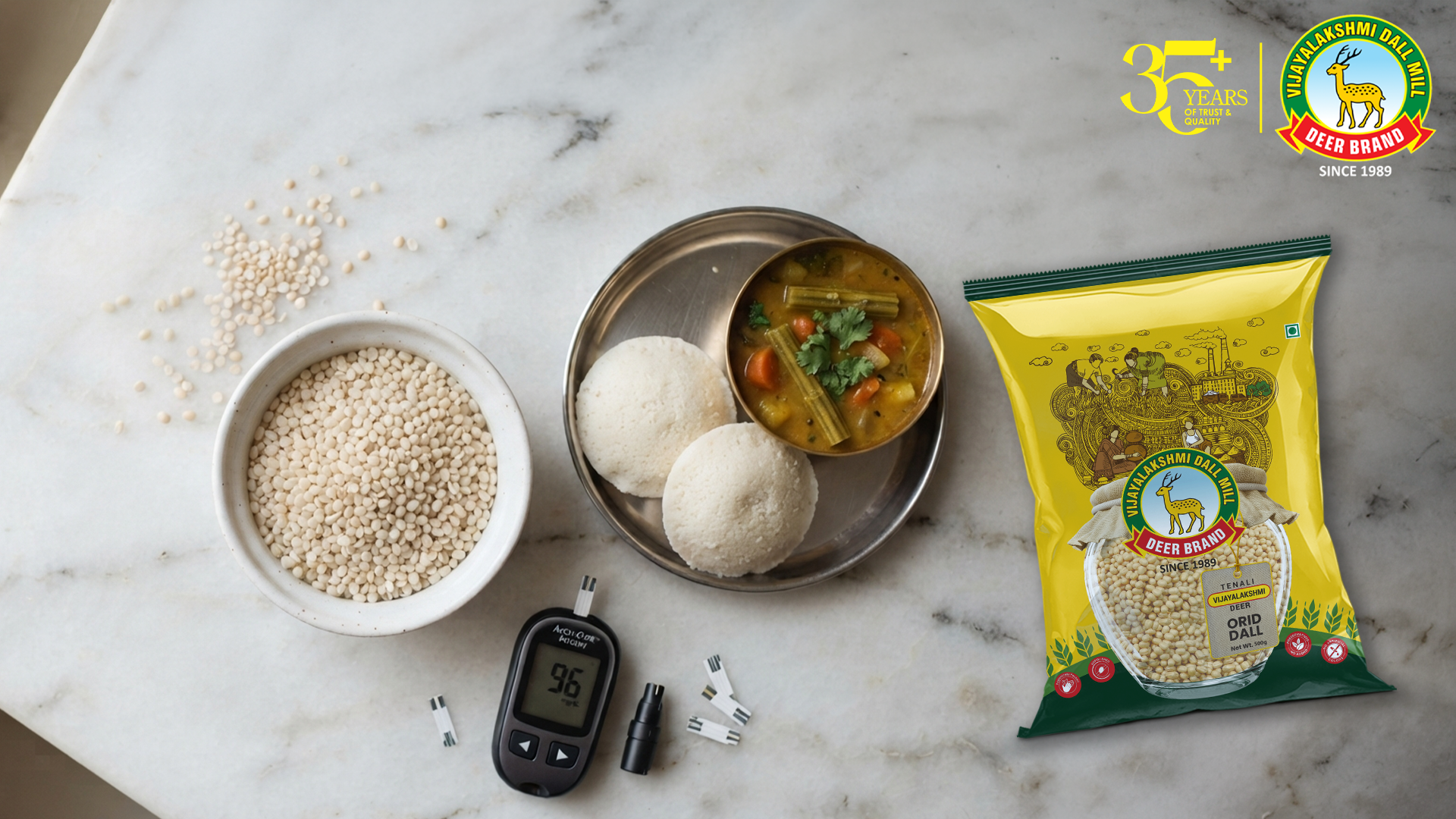
Blood sugar management is one of the most important aspects of long term health, not just for people with diabetes but for anyone who wants to maintain steady energy levels, avoid mid-day crashes, reduce cravings, and protect their metabolic health over time. The foods you eat at every meal directly affect how quickly glucose enters your bloodstream and how your body responds to it.
Urad dal is one of the most blood sugar-friendly staple foods in the Indian diet. Its low glycaemic index, high fibre content, high protein content, and fermentation benefits all work together to moderate blood sugar response and support insulin sensitivity. This post covers exactly what you need to know about urad dal and blood sugar, backed by nutrition science.
How Does Urad Dal Affect Blood Sugar?
Urad dal affects blood sugar favourably through four main mechanisms:
Low glycaemic index
The glycaemic index measures how quickly a food raises blood sugar after eating. Urad dal has a glycaemic index of approximately 43 to 55 depending on preparation method, which puts it firmly in the low to moderate category. For comparison white rice has a GI of approximately 72 and white bread approximately 75.
A low glycaemic index means blood sugar rises slowly and gradually after eating urad dal rather than spiking sharply. This gradual rise is easier for the body to manage and does not produce the sharp insulin response that leads to subsequent blood sugar crashes and hunger rebounds.
High dietary fibre
Urad dal contains 18 to 20g of dietary fibre per 100g of dry dal, making it one of the highest fibre foods in everyday Indian cooking. Dietary fibre slows the digestion and absorption of carbohydrates by forming a gel-like barrier in the digestive tract that carbohydrates must pass through before entering the bloodstream. This slowing effect directly moderates the blood sugar response after eating.
High protein content
Urad dal provides approximately 25g of protein per 100g. Protein slows gastric emptying, which means food moves from the stomach to the small intestine more slowly. This further moderates carbohydrate absorption and blunts the post-meal blood sugar response. The combination of high fibre and high protein in urad dal makes it one of the most effective plant foods for blood sugar management available in an everyday Indian diet.
Resistant starch
Urad dal contains resistant starch, a type of starch that is not digested in the small intestine and passes to the large intestine where it is fermented by gut bacteria. Resistant starch does not raise blood sugar and actually improves insulin sensitivity over time with regular consumption.
For the complete nutritional breakdown of urad dal, read our post on urad dal nutrition facts per 100g.
What Is the Glycaemic Index of Urad Dal?
The glycaemic index of urad dal varies by preparation method:
- Boiled whole urad dal: GI of approximately 43 to 48
- Fermented urad dal preparations like idli: GI of approximately 35 to 50
- White rice: GI of approximately 72
- White bread: GI of approximately 75
- Oats: GI of approximately 55
Urad dal in all its common preparations falls within the low glycaemic index range, making it suitable for people managing blood sugar as well as for anyone who wants to maintain stable energy levels throughout the day.
The glycaemic index alone does not tell the complete story. Glycaemic load, which accounts for both the GI and the portion size, is a more practical measure. Because urad dal is eaten in moderate portions as part of a larger meal, its glycaemic load per serving is low even when the GI is on the higher end of its range.
How Does Fermentation Lower the Glycaemic Index of Urad Dal?
Fermentation is one of the most important factors in making urad dal even more blood sugar-friendly. When urad dal batter is fermented for idli and dosa, several changes occur that reduce the glycaemic impact of the final food:
Carbohydrate breakdown
The fermentation process partially breaks down complex carbohydrates in the batter before the food is even eaten. This pre-digestion means the digestive system has less carbohydrate to process, which reduces the blood sugar response compared to unfermented preparations.
Phytic acid reduction
Fermentation reduces phytic acid, an antinutrient that in complex ways affects mineral absorption and metabolic response. The reduction of phytic acid through fermentation has been associated with improved insulin sensitivity in research on fermented legumes.
Lactic acid production
The fermentation process produces lactic acid, which slows starch digestion and further reduces the glycaemic response of the meal. Lactic acid from fermented foods has been shown to slow gastric emptying and reduce post-meal blood sugar spikes.
Probiotic benefit
Fermented urad dal introduces live beneficial bacteria into the digestive system. Research increasingly links a healthy gut microbiome to improved insulin sensitivity and metabolic function. Regular consumption of fermented foods like idli supports gut health which in turn supports blood sugar regulation.
Does Urad Dal Help with Insulin Resistance?
Insulin resistance is the underlying condition in type 2 diabetes and prediabetes where the body’s cells do not respond normally to insulin. Reducing insulin resistance through diet is one of the most important goals of metabolic health management.
Several components of urad dal have properties relevant to insulin resistance:
Dietary fibre
Regular consumption of high fibre foods is one of the most consistently supported dietary strategies for improving insulin sensitivity. The high fibre content of urad dal makes it a practical and effective addition to a diet aimed at reducing insulin resistance.
Magnesium (267mg per 100g)
Magnesium plays a direct role in insulin signalling and glucose metabolism. Low magnesium levels are associated with increased insulin resistance. Urad dal is one of the richest dietary sources of magnesium in everyday Indian cooking at 267mg per 100g, making it a particularly valuable food for insulin resistance management.
Resistant starch
The resistant starch in urad dal improves insulin sensitivity over time through its effects on gut bacteria and the production of short chain fatty acids. Short chain fatty acids produced when gut bacteria ferment resistant starch have been shown to improve insulin signalling in multiple research studies.
Protein
High protein intake is associated with improved insulin sensitivity and better blood sugar regulation. The 25g of protein per 100g in urad dal contributes to this effect when eaten as part of a balanced diet.
Which Urad Dal Preparations Are Best for Blood Sugar?
Fermented idli batter (best choice)
The fermentation process reduces the glycaemic index further and introduces lactic acid and beneficial bacteria that support blood sugar regulation. Two to three idlis with sambar is one of the most blood sugar-friendly breakfast options available in everyday Indian cooking. The sambar adds additional fibre and protein from lentils and vegetables which further moderates the glycaemic response of the meal.
Plain boiled urad dal with light tadka (excellent choice)
The lowest glycaemic impact urad dal preparation. Plain pressure-cooked urad dal with minimal added fat keeps glycaemic load low and maximises protein and fibre benefit. A squeeze of lemon adds vitamin C which improves iron absorption alongside blood sugar benefits.
Dosa with minimal oil (good choice)
Same fermentation benefit as idli. A plain dosa made with minimal oil is a good blood sugar-friendly choice. Avoid ghee-heavy preparations if blood sugar management is the primary goal.
Urad dal soup (good choice)
A blended urad dal soup with minimal added fat is high in protein and fibre and has a low glycaemic impact. A good light meal option for blood sugar management.
Sprouted urad dal (very good choice)
Sprouting reduces antinutrients similarly to fermentation and may further improve the blood sugar-friendliness of urad dal by reducing the starch content available for digestion.
Dal makhani (limit)
The urad dal base is blood sugar-friendly but the butter and cream add significant saturated fat and calories which can affect metabolic health and weight management over time. Smaller portions with reduced butter and cream are a better approach for people managing blood sugar.
How Much Urad Dal Should You Eat for Blood Sugar Management?
One to two servings of urad dal per day eaten consistently is the practical recommendation for blood sugar management. This provides meaningful fibre, protein, magnesium, and resistant starch at a level that contributes to improved insulin sensitivity and blood sugar regulation over time.
In practical terms for a blood sugar-focused daily eating plan:
- Breakfast: two to three idlis with sambar — low glycaemic, high fibre, provides magnesium and protein with the additional benefit of fermentation
- Lunch or dinner: one bowl of boiled urad dal with rice and vegetables — provides a second serving of blood sugar-friendly fibre and protein
The most important principle is consistency. Eating urad dal every day as part of a balanced diet that is low in refined carbohydrates and high in vegetables produces meaningful improvements in blood sugar regulation over weeks and months. Occasional consumption does not produce the same benefit.
Urad Dal and Blood Sugar: Practical Tips
- Always pair urad dal with fibre-rich accompaniments like sambar and vegetables to further slow carbohydrate absorption
- Choose fermented preparations like idli and dosa over plain boiled dal where possible for maximum blood sugar benefit
- Avoid eating urad dal preparations with large amounts of refined carbohydrates like white rice in very large portions, as the overall glycaemic load of the meal matters
- Add a squeeze of lemon or eat with tomato-based accompaniments to improve mineral absorption alongside blood sugar benefits
- Avoid large amounts of added fat in urad dal preparations as saturated fat affects insulin sensitivity over time
- Buy naturally processed unpolished urad dal that retains its full fibre and resistant starch content. For a complete guide on why this matters, read our post on unpolished urad dal vs polished: which is better
Frequently Asked Questions
Is urad dal good for diabetics? Yes. Urad dal has a low to moderate glycaemic index, high fibre content, and high protein content, all of which support blood sugar management. Fermented preparations like idli are particularly suitable because fermentation reduces the glycaemic index further. For a complete guide specifically on urad dal and diabetes, read our post on is urad dal good for diabetics.
Does urad dal raise blood sugar? Urad dal causes a slow and gradual rise in blood sugar rather than a sharp spike, because of its low glycaemic index and high fibre and protein content. This gradual rise is well within normal metabolic management for most people. Fermented preparations like idli have an even lower glycaemic impact than plain boiled dal.
Which is better for blood sugar, idli or rice? Idli made from fermented urad dal batter has a significantly lower glycaemic index than plain white rice. The fermentation process reduces the glycaemic impact of the carbohydrates in the batter. Eating idli with sambar rather than eating plain white rice produces a much more moderate blood sugar response.
Is urad dal good for prediabetes? Yes. The combination of low glycaemic index, high fibre, high protein, high magnesium, and resistant starch in urad dal makes it one of the most beneficial foods for people with prediabetes. Regular daily consumption as part of a diet low in refined carbohydrates supports improved insulin sensitivity and blood sugar regulation. Anyone managing prediabetes should work with their doctor for personalised dietary guidance.
How does magnesium in urad dal help blood sugar? Magnesium plays a direct role in insulin signalling and glucose metabolism. Low magnesium levels are associated with increased insulin resistance. Urad dal provides 267mg of magnesium per 100g, making it one of the best dietary sources of this blood sugar-relevant mineral in everyday Indian cooking. Regular consumption of magnesium-rich foods like urad dal supports normal insulin function as part of a balanced diet.
The Bottom Line
Urad dal is one of the most blood sugar-friendly staple foods in everyday Indian cooking. Its low glycaemic index, high fibre, high protein, high magnesium, and resistant starch content all work together to moderate blood sugar response, support insulin sensitivity, and provide sustained energy without sharp spikes and crashes.
Fermented preparations like idli maximise these benefits through the additional blood sugar-lowering effects of fermentation. Eating urad dal consistently every day as part of a balanced diet is one of the most practical and culturally familiar strategies for blood sugar management available in an Indian dietary context.
For naturally processed unpolished urad dal that retains its complete fibre and nutritional profile for blood sugar management, buy Vijayalakshmi Deer Brand natural urad dal — available in 500g, 1kg, and 5kg packs on JioMart, Amazon, and Flipkart.
Published by the Deer Brand Team — Vijayalakshmi Dall Mills, manufacturers of premium natural urad dal in Tenali, Andhra Pradesh since 1989.