10 Urad Dal Recipes You Should Try Beyond Idli and Dosa
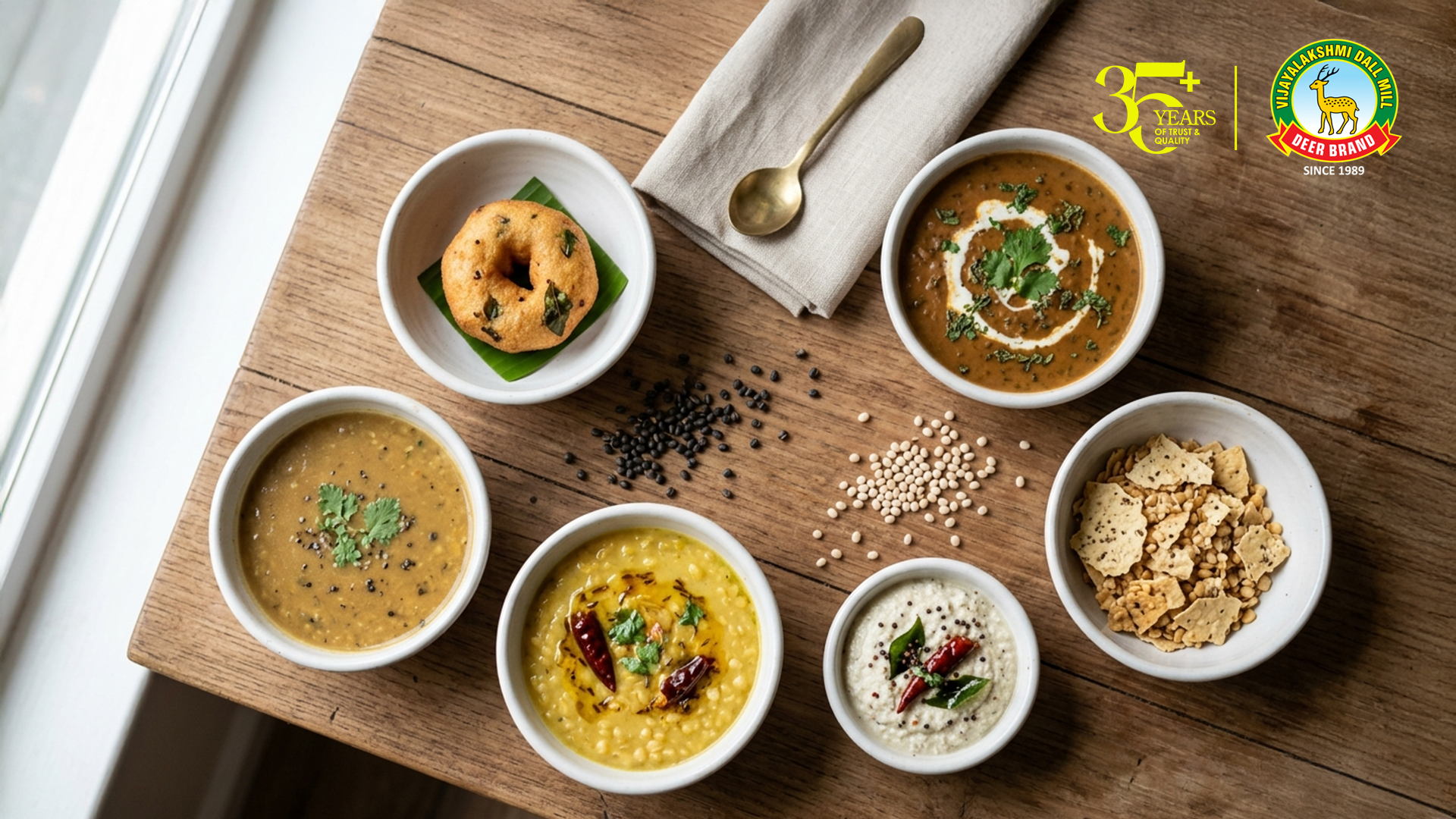
Most people associate urad dal with idli and dosa, and for good reason. These are two of the most beloved breakfast foods in India and urad dal is the heart of both. But if idli and dosa are all you are making with urad dal, you are using maybe 20 percent of what this dal is actually capable of.
Urad dal is one of the most versatile legumes in Indian cooking. It appears in everything from crispy deep-fried snacks to slow-cooked curries to creamy North Indian gravies to chutneys and papads. This post covers ten urad dal recipes worth trying, covering the full range of what this dal can do across different regional cuisines.
What Makes Urad Dal So Versatile in Indian Cooking?
Urad dal has two distinct properties that make it unusually versatile. First, it contains natural mucilage that drives fermentation, which makes it the base for any preparation that requires a light, airy, fermented batter. Second, when cooked without fermentation, it produces a thick, creamy texture that works beautifully in slow-cooked gravies and curries.
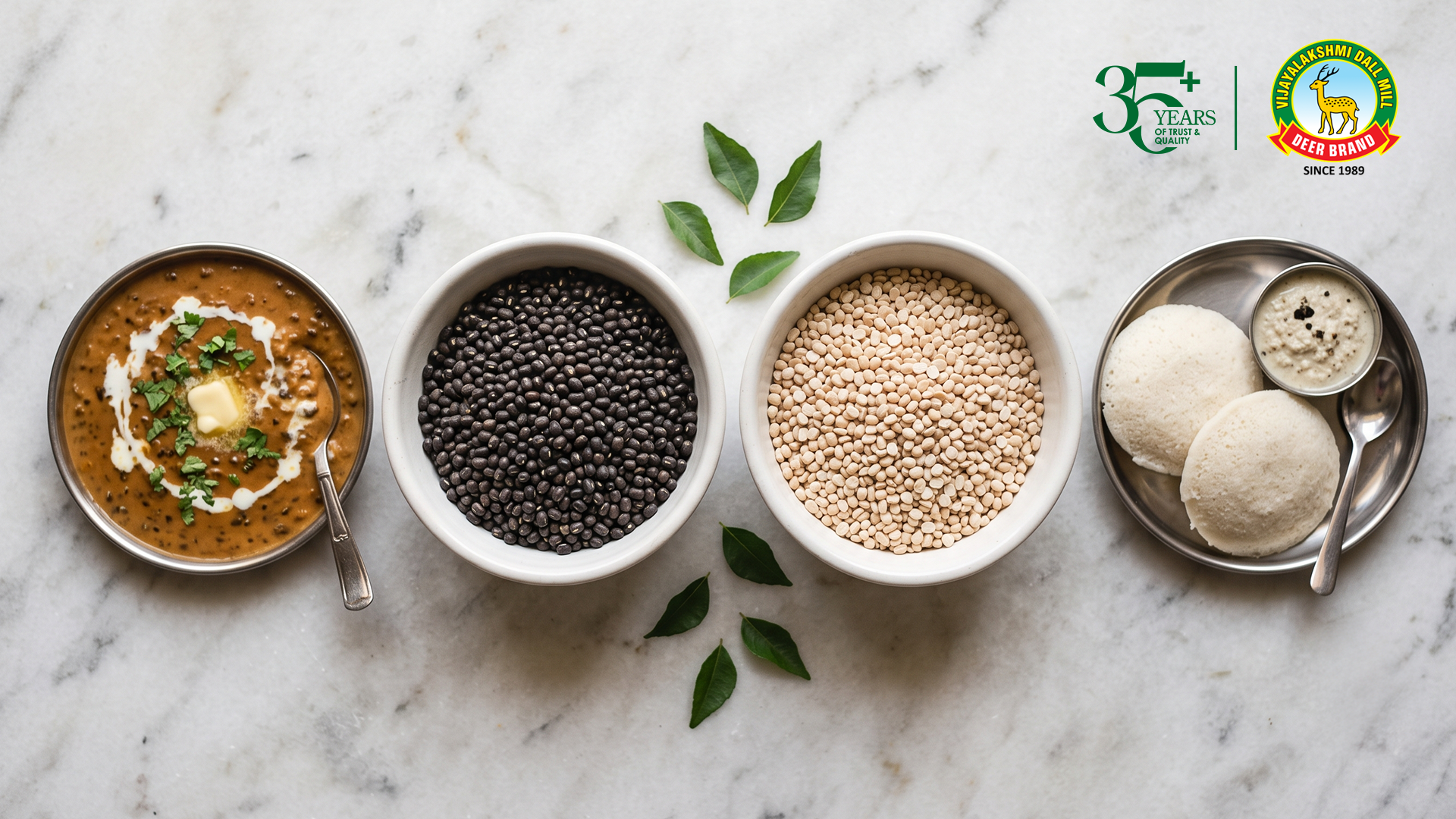
These two properties mean urad dal operates effectively in completely different culinary contexts. The same dal that produces a light, spongy idli also produces the rich, creamy dal makhani that is one of the most iconic dishes in North Indian cuisine.
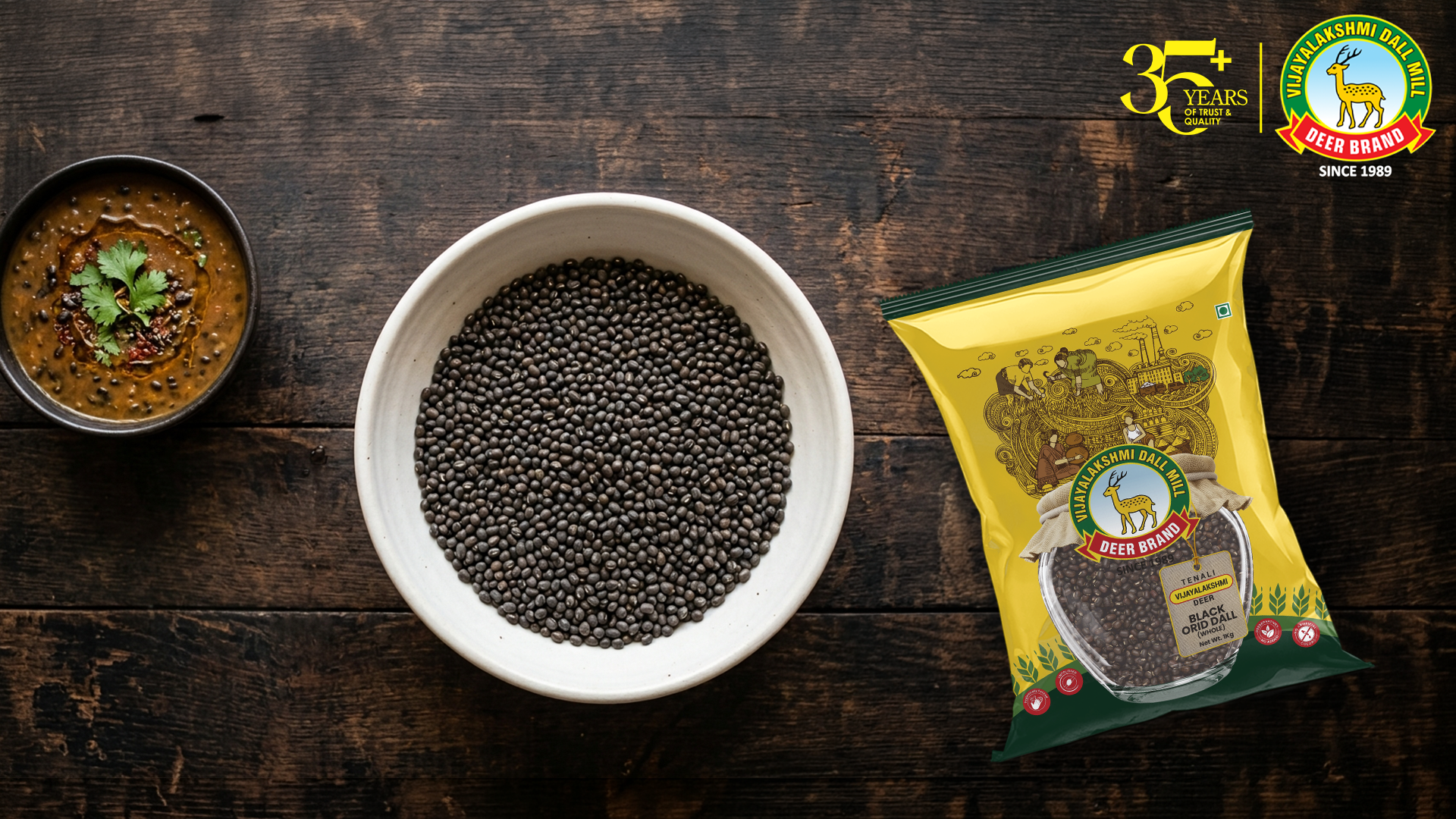
The variety of urad dal you use matters for each preparation. White dehusked urad dal is the standard for South Indian preparations. Whole black urad dal with the skin intact is the standard for North Indian dishes like dal makhani. For a complete overview of the different varieties and their uses, read our post on what is urad dal.
1. Medu Vada
Medu vada is the crispy, ring-shaped fritter that appears alongside idli on every South Indian breakfast plate. It is made from thick urad dal batter shaped into rings and deep fried until golden and crispy on the outside and soft on the inside.
The key to good medu vada is grinding the urad dal to the right consistency. The batter needs to be thick enough to hold its shape when dropped into hot oil. If it is too thin the vadas spread and become flat rather than holding their ring shape. The batter should be so thick that it does not pour off a spoon.
Medu vada is typically served with coconut chutney and sambar. It is also eaten as a street food snack throughout the day across South India.
For the complete fool-proof method with troubleshooting, read our post on crispy medu vada recipe using urad dal.
2. Urad Dal Khichdi
Khichdi is one of the most comforting and easily digestible meals in Indian cooking, and a version made with urad dal and rice is particularly nourishing. Unlike the more common moong dal khichdi, urad dal khichdi has a slightly richer, creamier texture because of the mucilage content of the dal.
It is cooked by pressure cooking soaked urad dal and rice together with turmeric, ghee, and salt until completely soft and well blended. A tadka of ghee, mustard seeds, cumin, dried red chilli, and curry leaves is added at the end. It is an ideal meal for recovery from illness, for young children being introduced to solid foods, or simply as a light and satisfying dinner.
3. Dal Makhani
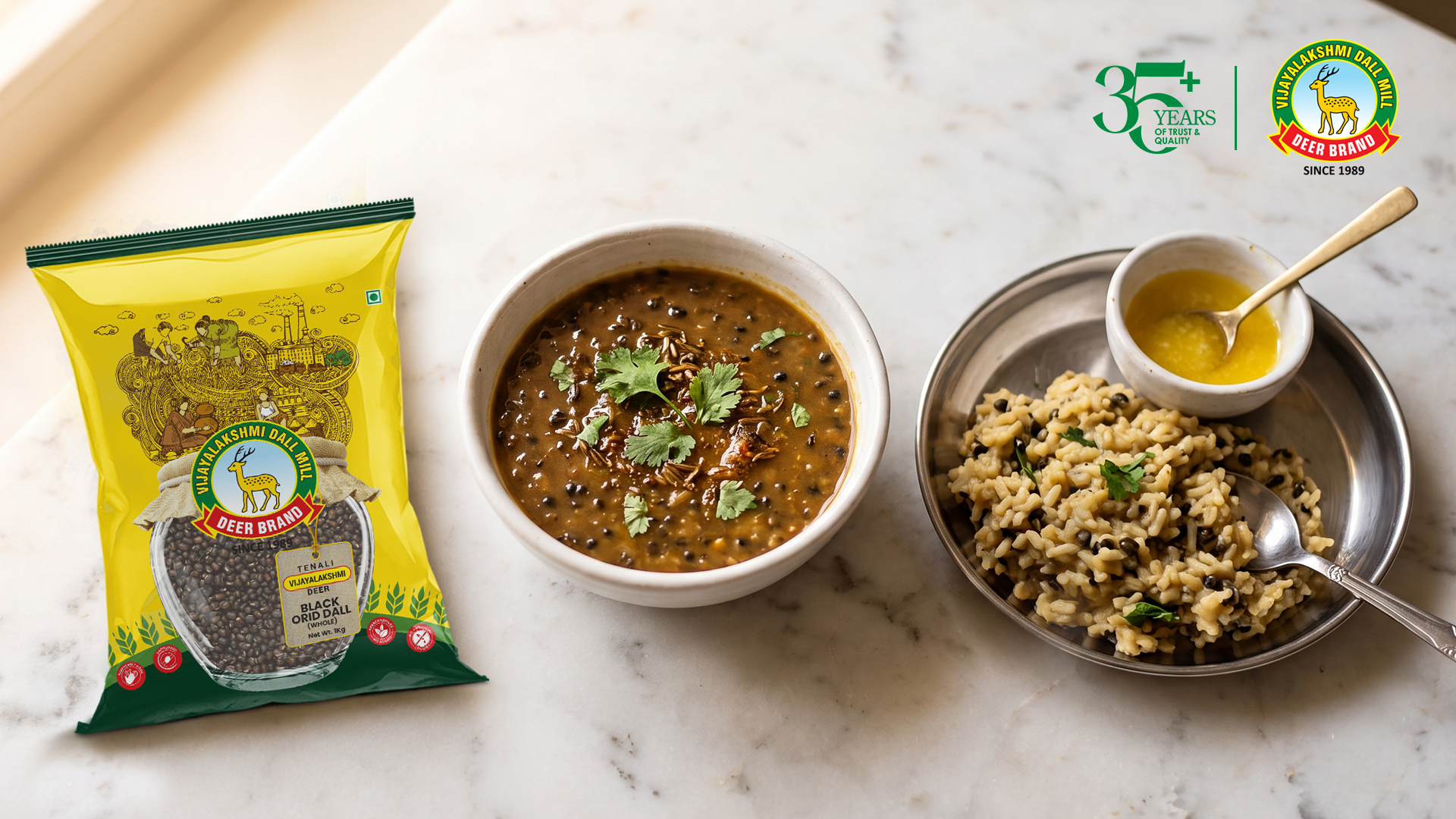
Dal makhani is one of the most iconic dishes in North Indian cuisine and one of the best arguments for keeping whole black urad dal in your pantry. It is a slow-cooked preparation of whole black urad dal with kidney beans, tomatoes, butter, cream, and a blend of spices, cooked for several hours until the dal breaks down into a thick, rich, deeply flavoured gravy.
The long cooking time is not optional. Dal makhani cooked for one hour tastes good. Dal makhani cooked for four to six hours tastes extraordinary. The longer it simmers the more the dal breaks down and the flavours deepen. Restaurant versions are often cooked overnight in a slow oven, which is why they have a depth of flavour that is difficult to replicate quickly at home.
The quality of the urad dal is the single biggest variable in dal makhani. Whole black urad dal that is fresh and properly stored cooks to a creamier, more flavourful result than old or poorly stored dal. For consistently good results, shop Deer Brand products which include whole black urad dal processed at our Tenali mills.
For the complete dal makhani recipe with step by step instructions, read our post on dal makhani recipe and why urad dal quality changes everything.”
4. Urad Dal Tadka
Urad dal tadka is the everyday boiled dal preparation that appears on lunch and dinner plates across South India. Unlike the more elaborate preparations on this list, it is simple, quick, and deeply satisfying.
White urad dal is pressure cooked with water, turmeric, and salt until soft. A tadka of ghee or oil with mustard seeds, cumin, dried red chillies, curry leaves, garlic, and onion is prepared separately and poured over the cooked dal. It is eaten with rice or roti and is one of the most nutritionally complete simple meals you can make.
The combination of urad dal with rice provides a complete protein with all essential amino acids, which is why this simple dal rice combination has been a dietary staple across South India for centuries.
5. Urad Dal Papad
Urad dal papad is the most widely eaten variety of papad in India. It is made from split white urad dal that is ground into a fine flour, mixed with spices and salt, kneaded into a dough, rolled into thin rounds, and sun-dried.
Making papad from scratch at home is a labour intensive process that is now mostly done at a commercial scale. But buying good quality urad dal papad and roasting or frying it at home is a different matter entirely. Freshly roasted urad dal papad served alongside dal rice or as a snack is one of those simple pleasures that requires minimal effort for maximum satisfaction.
6. Urad Dal Chutney
Urad dal chutney is a South Indian condiment that appears alongside dosa and idli as an alternative or addition to coconut chutney. It is made by dry roasting white urad dal until golden, then grinding it with red chillies, tamarind, salt, and sometimes tomato or garlic.
The roasted dal gives the chutney a nutty, slightly earthy depth that is completely different from the fresh coconut flavour of the more familiar chutney. It is also more shelf stable than fresh coconut chutney and can be stored in the refrigerator for two to three days.
7. Urad Dal Halwa
Urad dal halwa is a traditional dessert from North India, particularly associated with winter and festive occasions in Punjab and Rajasthan. It is made by roasting urad dal flour in ghee until fragrant and golden, then cooking it with sugar, milk, and cardamom until it comes together into a rich, dense, fudge-like halwa.
It is an intensely caloric and warming preparation traditionally eaten during cold weather. The high fat and sugar content means it is not an everyday food, but as an occasional festive preparation it is genuinely extraordinary. The roasted dal flour gives it a nutty, slightly grainy texture that is unlike any other halwa.
8. Pesarattu with Urad Dal
Pesarattu is a crispy crepe from Andhra Pradesh made primarily from whole green moong dal. A small proportion of urad dal is often added to the batter to improve the texture and give the crepe slightly more body and crispiness than a pure moong dal version.
The addition of urad dal to pesarattu batter is a technique used by experienced home cooks across AP and Telangana to get a better result from what is already a nutritious and popular breakfast dish. A ratio of roughly one part urad dal to four parts moong dal in the soaked batter works well.
Pesarattu is typically served with ginger chutney and upma, a combination known as MLA pesarattu in Andhra Pradesh, named for its association with the canteen of the state legislature in Hyderabad.
9. Urad Dal Vada Curry
Vada curry is a Tamil Nadu specialty that transforms leftover or freshly made urad dal vadas into a rich, spiced gravy dish. The vadas are broken into pieces and simmered in an onion and tomato based curry with coconut, chillies, and spices until they absorb the gravy and become soft and flavourful.
It is one of those dishes that demonstrates how Indian cooking minimises waste while maximising flavour. Vada curry is commonly eaten with parotta, idiyappam, or set dosa in Tamil Nadu and is one of the dishes most associated with roadside eateries and small restaurants across the state.
10. Urad Dal Soup
A simple urad dal soup is one of the most underrated preparations in this list. Pressure-cooked white urad dal blended to a smooth consistency with a light tadka of ghee, garlic, cumin, and black pepper produces a thick, creamy, deeply nourishing soup that works as a light meal on its own or as a starter.
It is particularly suitable for people managing weight, for recovering from illness, or for anyone looking for a high-protein, high-fibre meal that is easy to prepare and digest. The high protein content of urad dal, approximately 25g per 100g, makes this soup one of the most protein-dense plant-based soups you can make from everyday Indian pantry ingredients.
For the complete nutritional breakdown of urad dal including protein, fibre and minerals, read our post on urad dal nutrition facts per 100g.
Frequently Asked Questions
What are the most popular urad dal recipes in South India? The most popular urad dal preparations in South India are idli, dosa, medu vada, urad dal tadka, urad dal chutney, and pesarattu with urad dal. White dehusked urad dal is the standard variety used across all of these preparations in Andhra Pradesh, Telangana, Tamil Nadu, and Karnataka.
Can I use white urad dal for dal makhani? Dal makhani is traditionally made with whole black urad dal with the skin intact, not white dehusked urad dal. The skin contributes to the colour, texture, and flavour of the dish. White urad dal produces a very different result. For authentic dal makhani, whole black urad dal is the correct variety to use.
How do I make urad dal batter without a wet grinder? You can make urad dal batter in a high-powered blender or mixie. Soak the dal for at least 6 hours, drain completely, and grind in short bursts using ice-cold water to prevent heat build-up. The batter will not be quite as airy as a wet-grinder batter but will produce good results if the dal quality is good and the fermentation is given enough time.
Which urad dal recipes are best for weight loss? Urad dal tadka with rice, urad dal soup, and steamed idli are the best urad dal preparations for weight loss because they are low in added fat and high in protein and fibre. Deep fried preparations like medu vada and rich preparations like dal makhani are less suitable for frequent consumption during weight loss.
What is the difference between medu vada and urad dal vada? Medu vada and urad dal vada refer to the same preparation. Medu means soft in Kannada, referring to the soft interior of the fried vada. Both terms describe the same dish of thick urad dal batter shaped into rings and deep fried. The name varies by region but the preparation is the same.
The Bottom Line
Urad dal is one of the most versatile ingredients in Indian cooking. From the crispy exterior of a medu vada to the creamy depth of a slow-cooked dal makhani to the simplicity of a dal tadka, the range of what this dal can do is remarkable. Each preparation brings out a different quality of the grain.
The common thread across all of these recipes is that the quality of the dal determines the quality of the result. Naturally processed, fresh urad dal performs better in every one of these preparations than old or over-processed dal. For dal that delivers consistent results across all these recipes, buy Deer Brand natural urad dal — available in 500g, 1kg, and 5kg packs on JioMart, Amazon, and Flipkart.
Published by the Deer Brand Team — Vijayalakshmi Dall Mills, manufacturers of premium natural urad dal in Tenali, Andhra Pradesh since 1989.