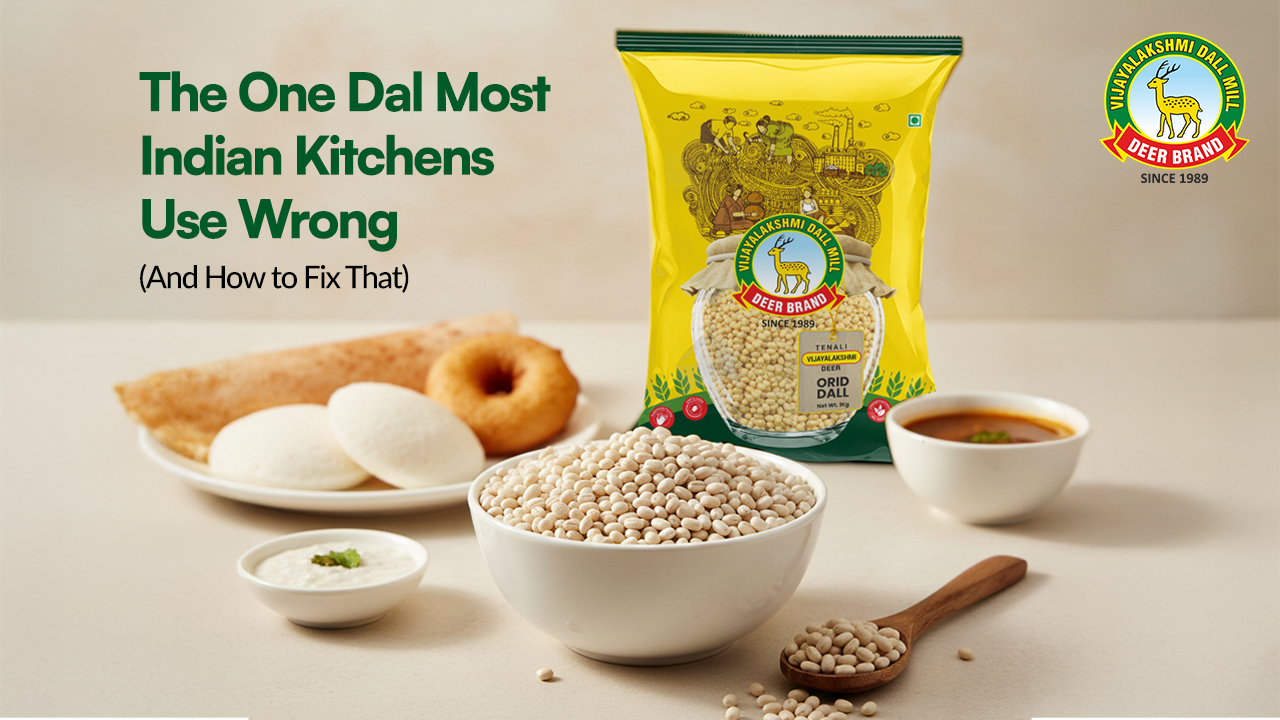
The One Dal Most Indian Kitchens Use Wrong (And How to Fix That)
There’s a dal in your kitchen right now that you probably use every week.
Maybe even every day.
But chances are, you’ve never really thought about it.
You just know it’s the one that makes your dosa crispy, your idli soft, and your vada golden and fluffy.
That’s “urad dal”.
And here’s the surprising part – most people are using the wrong kind, or worse, they don’t even know what makes a good one.
Why Urad Dal Deserves More Attention
Indian cooking relies heavily on dals, but urad dal plays a role that’s hard to replace.
It’s not just another lentil.
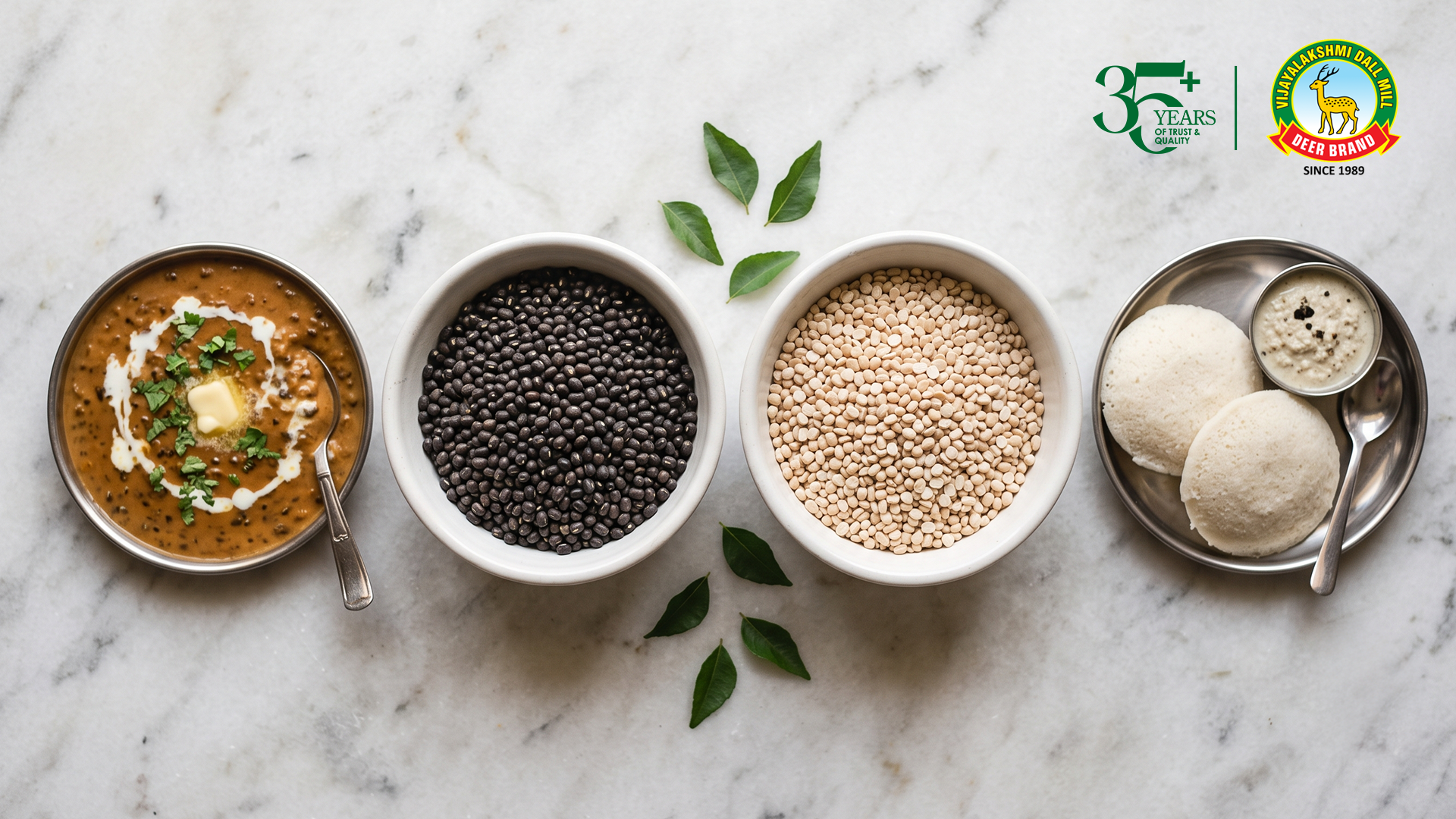
It’s the backbone of South Indian breakfast staples and the secret behind that creamy, rich dal makhani everyone loves.
Yet, when people shop for groceries, they often pick any packet off the shelf without checking the quality, the source, or even the grain size.
And that’s where things go wrong.
Because urad dal isn’t just about colour – it’s about how it cooks, how it ferments, and how it holds up in your recipes.
What Makes Urad Dal So Special?
Urad dal has a dense, creamy texture that no other dal can match.
When you grind it into a batter, it ferments beautifully, giving you that airy, fluffy idli or that perfectly crisp dosa edge.
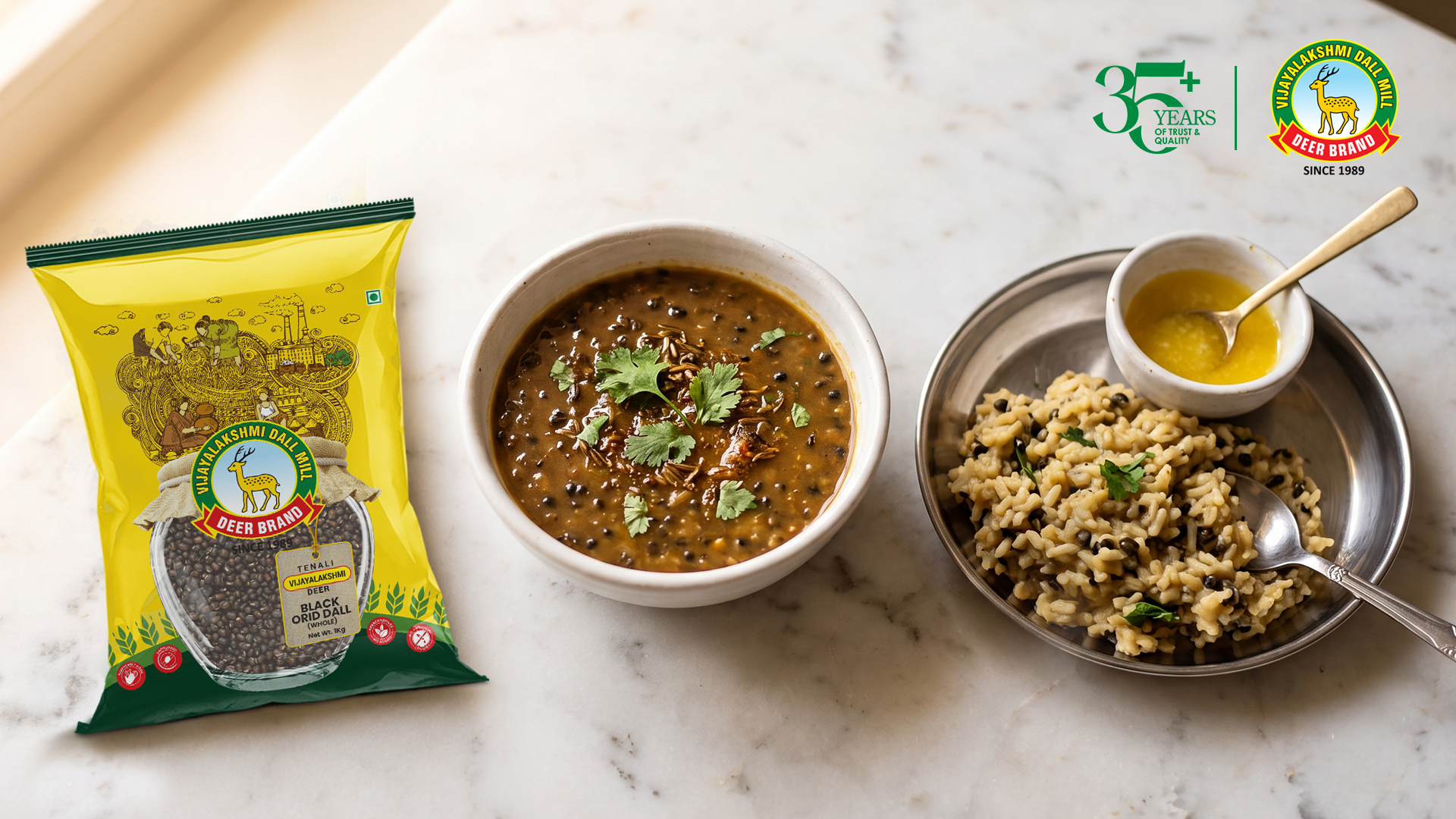
When you cook it whole, it absorbs spices like a sponge, turning into a thick, flavourful gravy that coats every grain of rice.
This is why it’s also called minapagullu in Telugu-speaking regions – a traditional name that reflects its deep roots in South Indian cooking.
But not all urad dal behaves the same way.
The quality of the grain, where it’s grown, and how it’s processed – all of this affects your final dish.
Urad Dal vs Toor Dal: What’s the Real Difference?
People often confuse urad dal with toor dal because both are staples.
But they’re worlds apart.
Toor dal is lighter, cooks faster, and is perfect for everyday sambar or rasam. It’s mild and easy on the stomach.
Urad dal, however, is richer and denser. It takes time to cook, but the payoff is worth it – silky texture, deeper flavour, and better fermentation.
If toor dal is your daily workhorse, urad dal is your weekend hero.
How to Choose Urad Dal That Actually Works
Here’s what to look for:
The grains should be uniform in size and free from stones or broken bits. Good urad dal has a natural sheen and feels smooth to touch.
It should also come from regions known for quality pulse farming – like Andhra Pradesh, where soil conditions and farming practices result in some of the best lentils in the country.
When you cook it, the dal should soften evenly without turning mushy too soon. That’s a sign of freshness and proper processing.
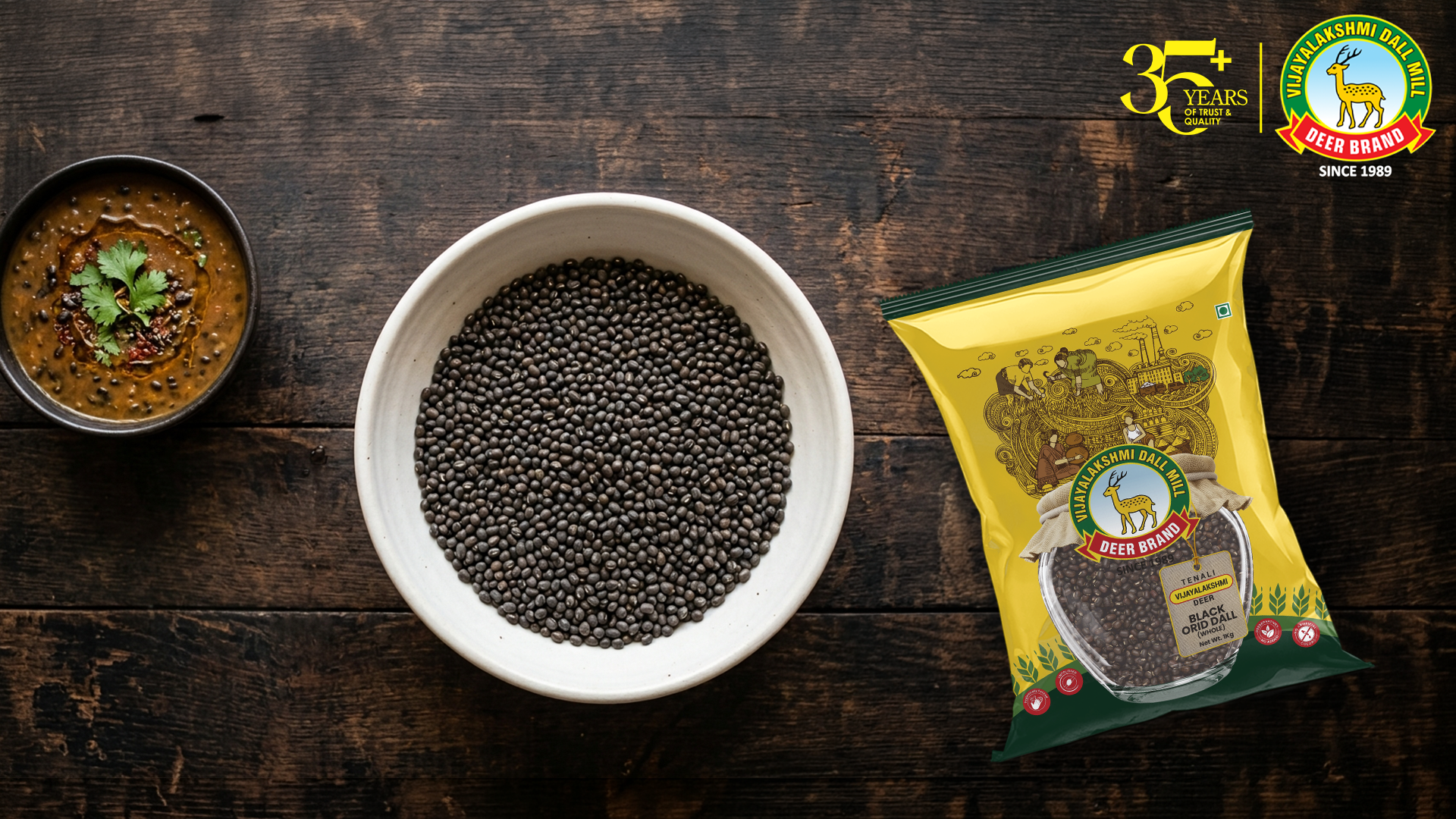
Many families trust Vijayalakshmi Deer Brand for exactly this reason – consistent grain quality, minimal impurities, and dal that performs reliably in every recipe, whether it’s a quick tadka or a slow-cooked gravy.
Why Your Kitchen Needs the Right Urad Dal
Beyond the classics like idli and dosa, urad dal is incredibly versatile.
You can make medu vada, add it to upma for protein, or use it as a tempering ingredient to bring out nutty, roasted flavours in curries.
It’s also rich in protein, iron, and fibre – making it a smart choice for families looking to eat healthier without sacrificing taste.
But all of this only works if you start with good quality dal.
The Takeaway
Urad dal isn’t fancy, but it’s fundamental.
And once you start paying attention to the quality you bring home, you’ll notice the difference – in taste, texture, and how much easier cooking becomes.
So next time you’re shopping, don’t just grab any pack.
Look for uniform grains, trusted sourcing, and brands that families have relied on for years – like Vijayalakshmi Deer Brand.
Because good food starts with good ingredients.