You’d think buying dal would be straightforward. After all, it’s a kitchen staple we’ve grown up with. Yet walk into any grocery store today, and you’ll find yourself staring at rows of packets – each claiming to be pure, premium, or “traditional.” Five minutes later, you’re still confused.
If this sounds familiar, you’re not alone.
The Problem: Too Many Choices, Too Little Clarity
Indian households use dal almost every single day. It’s comfort food, nutrition, and tradition rolled into one. But choosing the right dal has become surprisingly difficult.
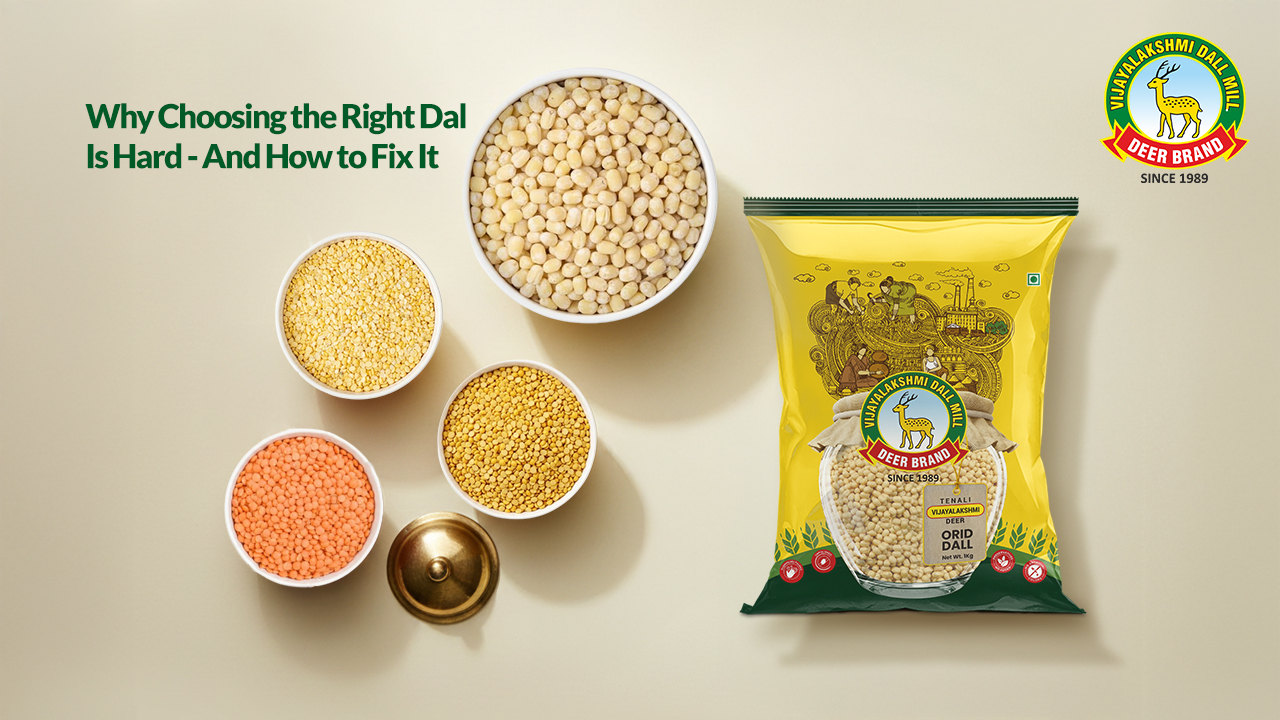
There are dozens of varieties – toor, moong, masoor, and urad – each available in whole, split, washed, or unpolished forms. Add to that the flood of brands, vague packaging claims, and inconsistent quality, and it’s easy to see why so many of us end up picking whatever’s on sale or looks familiar.
The real issue? Most of us don’t know what to look for.
The Agitation: When Poor Quality Ruins Your Meal
Here’s where it gets frustrating.
You buy a packet that looks fine. You soak it, cook it, and wait. But instead of the creamy, soft texture you expected, the dal remains hard. Or it takes forever to cook. Or worse – the dish tastes flat, no matter how much tempering you add.
Sometimes, you’ll notice stones or dust mixed in. Other times, it just doesn’t smell right. And when you’re cooking for your family or guests, these small issues become big problems.
Inconsistent quality doesn’t just waste time – it affects taste, nutrition, and your confidence in the kitchen.
The Solution: A Simple Dal Quality Checklist
The good news? You don’t need to be an expert to choose better dal. You just need to know what to check.
Here’s a quick checklist that works every time:
1. Look for Uniformity
Quality dal has even-sized grains with consistent color. Avoid packets with too many broken pieces or discoloration.
2. Check for Purity
Hold the packet up to the light. Good dal should be free from stones, dust, and foreign particles. If you see impurities, skip it.
3. Smell Matters
Fresh dal has a mild, earthy aroma. If it smells musty or stale, it’s been sitting too long.
4. Know Your Source
Where your dal comes from matters. Regional sourcing, like premium urad dal from Andhra Pradesh, often means better farming practices and fresher stock. Trusted brands with a history of quality control are worth choosing over random labels.
5. Cook Test
If possible, check how evenly it cooks. Quality dal softens uniformly without turning mushy or staying hard.
Why Consistency Beats Everything
Once you start using this checklist, you’ll notice something important: consistency is the real game-changer.
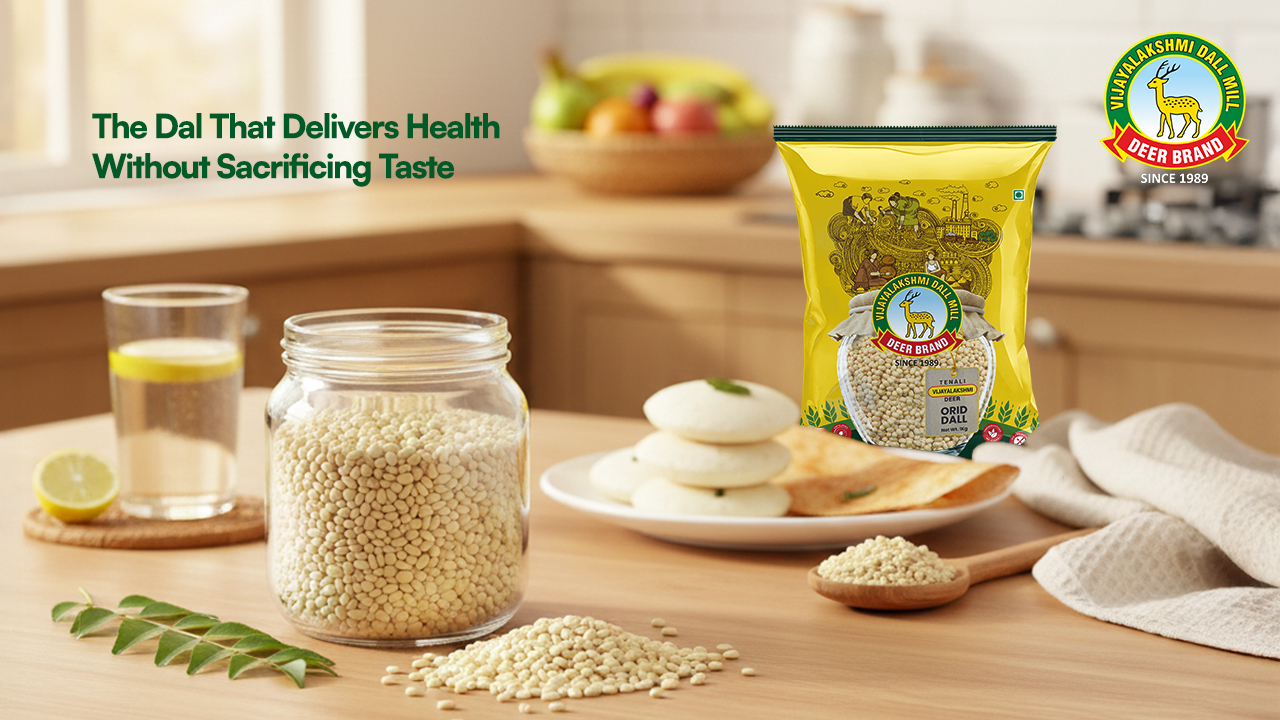
Brands that maintain the same quality batch after batch make your life easier. You don’t have to guess or experiment every time you cook. That’s where reliable sourcing and quality checks come in – and that’s what brands like Vijayalakshmi Deer Brand quietly focus on. No flashy claims, just dal that cooks the way it should, every single time.
Choose Smart, Not Hard
Buying dal doesn’t have to be a gamble. With a simple checklist and a little attention to detail, you can bring home dal that’s pure, fresh, and reliable – making your everyday meals better without any fuss.
So next time you’re standing in that aisle, take a breath. Check the grain. Trust the source. And cook with confidence.